
What if an affordable getaway is less about cutting out the fun and more about choosing the right destination, dates and trip length? A good budget travel guide helps you make those choices before booking, so a weekend escape or longer adventure can fit your budget without sacrificing the experiences you care about.
When choosing flights, baggage and accommodation, compare what each option includes and choose the combination that best fits your budget and travel plans.
Here, you’ll learn how to match a destination and trip length to your budget, compare flights with baggage included, time your airfare purchase and spot affordable getaway ideas, with practical tips for making the most of every day away.
Key Takeaways
- Choose a destination and trip length that fit your travel style, then shape the itinerary around the experiences you most value.
- Compare flight options by checking baggage rules, schedules and the full journey.
- Plan your airfare search around your travel dates and booking window, while keeping your plans flexible where possible.
- Look beyond famous hotspots for weekend escapes, and use Budgettravelplaces.com guides to find inspiration for affordable destinations.
Defining destination, trip length and travel style
- Set your trip priorities before choosing a destination. List the experiences you most want, such as coastal walks, museums or local food. Then consider how much time you have and what pace suits you. A family might prefer fewer stops and a relaxed schedule, while solo travellers may enjoy a flexible route with room for detours.
- Match the destination to the kind of trip you want. Compare places by season, journey time, local transport and activities. A European city break may suit museum visits and public transport, while a rural escape could require more planning to get between villages. Choose somewhere that supports your priorities, rather than relying on its reputation alone.
- Choose a trip length that gives each place time. Map out travel days and time to settle in, get around and enjoy planned activities. A four-day trip can feel less rushed if you focus on one area instead of squeezing several destinations into the itinerary. Consider your travel style too: a private room, shared accommodation and self-catering each create a different daily rhythm.
- Keep planning focused and adjust your itinerary early. Pick the sights or experiences that matter most, then group nearby places together. This makes each day easier to follow and leaves room for an unplanned market visit or quiet walk. Review your schedule each evening and adjust the next day’s plans if travel takes longer than expected.
- Prepare for health needs and pack with care. Before leaving the UK, read your travel insurance policy’s medical-cover terms and exclusions, and review your destination’s entry and health requirements. Make a checklist of travel documents, medication, chargers, weather-appropriate layers and a reusable water bottle. Remove items you can borrow or leave behind, and check baggage limits before you travel.
Trip costs vary with time of year, length of stay, airfare, accommodation, activities, transport and travel style. The guide’s example gives a daily spending target of about $300 for a four-day trip with a $1,200 budget. A budget helps an advisor choose realistic accommodation and destinations that fit comfortably.
A budget can change as travellers adjust plans or choose upgrades and experiences. The author recommends setting aside $120 if estimated activities spending is $100. Track spending daily and adjust early to stay on budget.
Comparing flights and baggage options
Look beyond the flight itself when planning your journey. Baggage, arrival times, local transport, meals and accommodation all affect how smoothly a trip comes together.
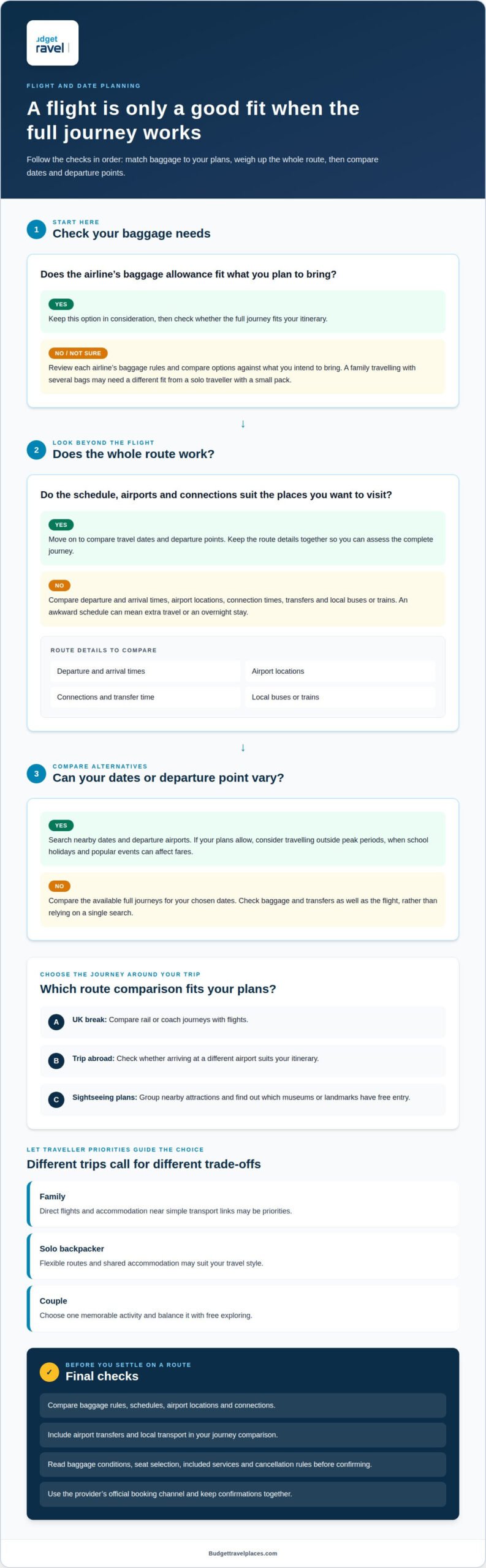
- Compare flights against your baggage needs. Review each airline’s baggage allowance and choose an option that suits what you plan to bring. A family travelling with several bags has different needs from a solo traveller with a small pack. Check departure and arrival times, airport locations and connections too, since an awkward schedule can mean extra travel or an overnight stay.
-
Compare Routes and Transport Options
Track route options for your chosen season, and compare the full journey rather than focusing only on the flight. Look at airport transfers, local buses or trains, connection times and the locations you want to visit. For sightseeing, group nearby attractions together and find out which museums or landmarks have free entry. Explore budget travel articles for more planning ideas.
- Plan meals around your accommodation. Check whether breakfast is included and whether you’ll have access to a kitchen. Preparing a simple breakfast or lunch can leave more room in your plans to try a local restaurant or food market. Check nearby shops and transport before choosing where to stay, so meals and daily errands fit naturally into your itinerary.
-
Check Booking Terms and Stay Safe
Read the booking terms carefully before confirming a flight or accommodation. Check baggage conditions, seat selection, included services and cancellation rules. Use the provider’s official booking channel, and be cautious of urgent payment requests or unexpected changes sent by message. Keep confirmations together so you can compare later communications with the details you received when booking.
- Choose accommodation for its location and terms. Check what your stay includes, such as breakfast, cleaning or shared facilities. Consider how far it is from your planned sights and transport links. A well-placed room may simplify your itinerary, while a more distant stay could suit a slower trip with fewer daily outings.
Comparing travel dates and planning your trip
- Compare travel dates before booking. Search nearby dates and departure airports, then compare the full journey, including baggage and transfers. Demand around school holidays and popular events can affect fares, so consider travelling outside peak periods if your plans allow. For UK breaks, compare rail or coach journeys with flights; abroad, check whether arriving at a different airport suits your itinerary.
- Build your plan around traveller priorities. A family may value direct flights and accommodation near simple transport links, while solo backpackers might prioritise flexible routes and shared accommodation. Couples planning a romantic escape can choose one memorable activity and balance it with free exploring. Consider your travel, accommodation, meal and activity options before settling on a destination.
- Choose when to book with flexibility in mind. Start tracking suitable routes once you know your preferred travel period, and compare fares over time rather than relying on a single search. For Christmas travel, average airfare lows have been found around eight weeks before departure. Treat this as a comparison point, not a reason to delay if your dates or route have limited options.
- Consider stays beyond hotels. Hostels, guesthouses and self-catering accommodation suit different travel styles. A kitchen lets you prepare some meals, while a guesthouse may include breakfast. Compare location, transport links and included features, since a remote stay can mean extra journeys. Choose the option that fits your group and planned activities.
- Plan a trip in the UK or abroad by comparing the whole itinerary. Start with the experience you want, then weigh destinations by season, transport connections and places to stay. Keep dates flexible where possible, and avoid squeezing several stops into a short break. A clear plan helps you decide whether changing your destination or travel day could make the trip work better for you.
Affordable destinations and weekend getaways
Compare destinations by the whole itinerary, not just the appeal of one famous sight. Whether you’re planning a weekend or a longer trip, decide what you want to experience and prioritise destinations that fit your travel style.
- Shortlist destinations with practical connections. For a UK break, compare places reachable by train or coach with options that require a flight. Abroad, check how you’ll get from the airport to your accommodation and whether public transport serves the areas you want to explore. Easy connections can leave more time for the experience itself.
-
Compare Affordable Destinations and Getaways
Choose a few destinations, then compare travel dates, accommodation locations and the activities you’d prioritise in each. A coastal escape, historic city and countryside weekend offer different kinds of comfort and adventure. Check seasonal demand and local events before deciding, since both can affect availability and the feel of your stay.
- Choose a weekend itinerary that limits extra journeys. Pick one base and group nearby sights together, rather than crossing an area repeatedly. In a city, check whether public transport connects your accommodation with museums, parks and restaurants. For a rural break, decide how you’ll reach walks or villages before booking, so travel logistics don’t crowd out your time away.
- Protect your plans without letting payment dictate them. Include travel insurance in your planning, and read its cover terms before departure. If using a credit card, keep spending within your planned limit and track transactions during the trip. For destination inspiration, explore affordable getaway guides and compare their ideas against your dates, transport options and priorities.
Budgettravelplaces.com: Budget Travel Guides and Articles
Budgettravelplaces.com publishes Budget Travel Guides and Articles to help you plan an adventure. Explore the guides when weighing destinations, looking for hidden gems, considering welcoming accommodation or seeking practical ways to make the most of your trip.
Use these ideas to shape a trip around what matters to you, whether that’s a solo exploring break, a family getaway or a romantic escape. Pair destination inspiration with money-saving tips, then make choices that suit your dates, travel style and priorities. Thoughtful planning leaves room for the fact that every trip is different.
For more inspiration as you plan, contact Budgettravelplaces.com.
Turn your travel ideas into a plan
Your next trip doesn’t need a perfect itinerary from day one. Choose one experience you’re excited about, then let it guide your first planning decisions. A budget travel guide can help turn that spark into a trip that fits your priorities, whether you’re dreaming of a quiet weekend away or a longer journey.
Give yourself room to refine the details as you go. You might swap a busy city for a slower-paced destination, or save a special activity for another trip. The best plan is one that leaves you looking forward to the journey, not worrying over every decision.
Budgettravelplaces.com’s team shares practical travel ideas to help you plan with confidence and find inspiration for your next adventure. Take the next step when you’re ready: explore Budgettravelplaces.com’s travel guides and start shaping a getaway that feels right for you.
Frequently Asked Questions
Is Travel Really That Expensive?
Travel can be expensive, but the experiences you choose make a difference. A short break focused on free museums, parks and local walks can feel rewarding without a packed schedule of paid activities. Decide what matters most, such as a special meal or a particular attraction, then shape the rest of your plans around it. Memorable travel doesn’t have to mean spending on everything.
Cheapest months and days to travel from the UK
Travel outside peak periods where possible and compare nearby dates. Booking on Tuesday is cited as reducing international travel costs by 8%.
How to find affordable accommodation, hostels and campsites
Compare hostels and other stays by location, transport links and included features. A hostel or self-catering stay may suit your travel style; check the full cost and how easily you can reach planned sights. Campsites are not covered.