
May through June and September through October are favourable seasons for cultural touring in Europe. Córdoba, Lebanon and Uzbekistan offer history, local traditions and memorable experiences around which to plan a trip. Keep spending intentional: choose one paid highlight each day, then leave room for free walks, local food and unhurried discoveries. This guide covers destination ideas, practical budgeting and when to plan a meaningful cultural escape.
Key Takeaways
- Explore cultural destinations such as Córdoba, Lebanon and Uzbekistan, and choose experiences that connect you with local history and traditions.
- Build your itinerary around one meaningful highlight each day, leaving space for slower, lower-cost discoveries.
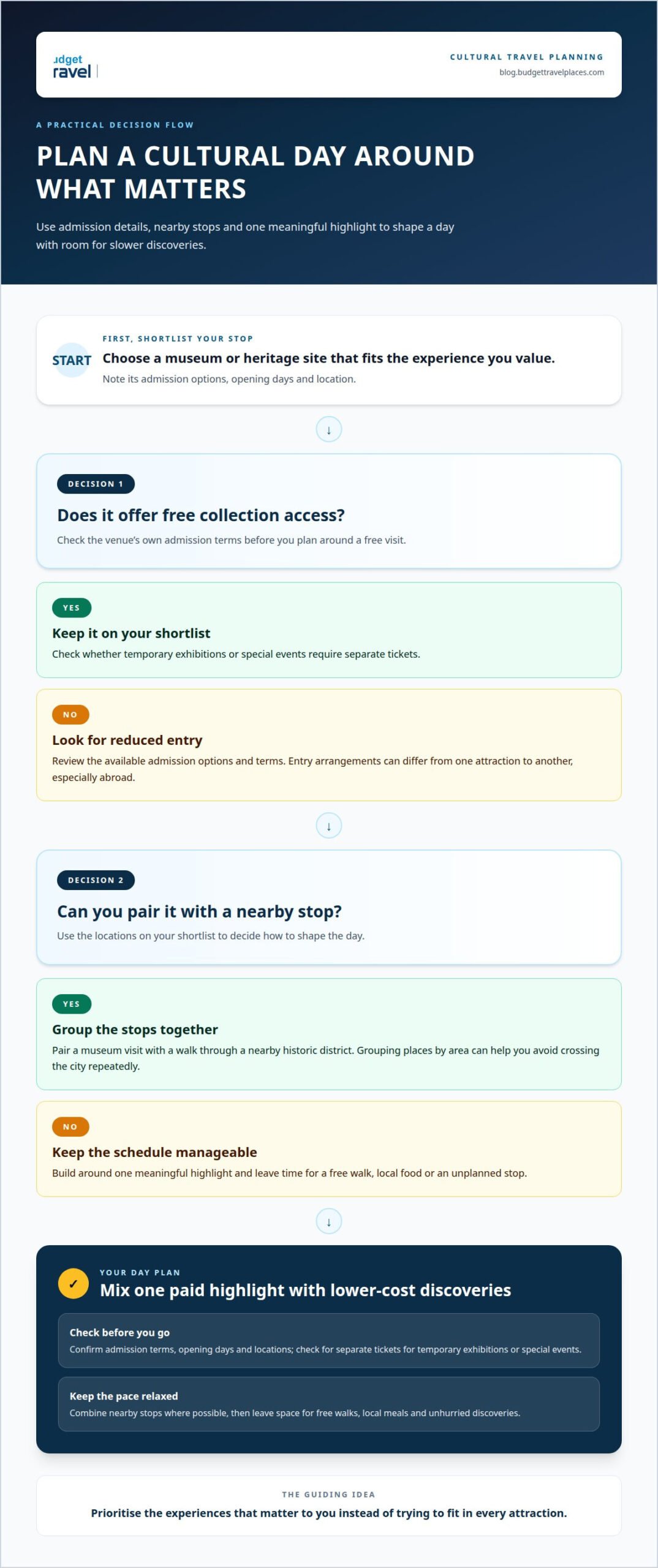
- Make your budget work harder by prioritising experiences that matter to you instead of trying to fit in every attraction.
- For cultural touring in Europe, consider May through June or September through October when planning your trip.
- Use Budgettravelplaces.com’s Budget Travel Guides and Articles for practical ideas on affordable destinations and saving while travelling.
Cultural destinations including Cordoba, Lebanon and Uzbekistan
Córdoba, Lebanon and Uzbekistan each offer distinct histories, architecture and local traditions. For affordable cultural travel, match your destination to the experiences you value, then organise each day around a theme, such as historic streets, museums or regional food.
Tour Themes and Highlights
A European cultural tour might focus on architecture, old-town walks, museums or local traditions. Córdoba offers a starting point for exploring Moorish architecture, while Central Europe suits travellers drawn to historic city centres and museum collections. Choose a theme for each stop and leave time to explore on foot. This gives your itinerary direction without filling every day with ticketed attractions.
Beyond Europe, a locally guided visit to Comuna 13 in Medellín can help you learn about the city’s transformation respectfully. In Mexico, shape a route around regional history, food or craft traditions that interest you. A cultural tour built around one theme can make it easier to choose which places deserve more time.
Affordable Cultural Destinations
When planning affordable cultural travel, consider destinations where you can explore historic areas on foot. Córdoba, Lebanon and Uzbekistan each offer a distinctive cultural setting; compare their history, architecture and traditions with the kind of trip you want. A self-guided route through an old town can take two hours, leaving time for a market, a local meal or an unplanned stop along the way.
Belize is described as the only English-speaking country in its region, which may appeal if language familiarity matters to you. Wherever you travel, consider how easily you can reach the cultural sites on your list. A compact itinerary leaves more room for local discoveries and keeps daily plans manageable.
Free and Discounted Cultural Entry
In the UK and abroad, look for museums offering free collection access and cultural attractions with reduced entry. Check each venue’s admission terms, including whether temporary exhibitions or special events require separate tickets. This helps you plan around what you can actually see rather than assuming every display is included.
Shortlist museums and heritage sites, noting their admission options, opening days and locations. Group nearby stops together, such as a museum visit and a walk through a historic district. Abroad, check each attraction’s terms, as entry arrangements differ. Mixing free visits with one paid highlight is a practical way to make affordable cultural travel work for your itinerary.
Balkan heritage sites and local traditions
In Balkan cities, heritage comes alive through historic streets, religious buildings, markets and everyday customs. Choose a destination based on the experiences you want, then group nearby places into a relaxed route. A morning walk through an old quarter, for example, can lead naturally to a local market or a small community workshop. This approach gives each stop room to feel meaningful.
Let local life shape your plans. A homestay can give you the chance to share meals and conversations with a local family, adding personal context to the places you visit. A locally owned guesthouse can also keep your accommodation choice rooted in the community. Consider location as well as room features: staying near the heritage highlights you want to see can simplify daily journeys.
Compare locally owned guesthouses with hotels by considering what matters most for your trip. A central base may make it easier to walk to historic sites, while accommodation farther out can mean planning around public transport. Read the booking conditions and consider whether shared meals, local recommendations or a quieter setting suit your travel style. The right choice depends on your priorities, not a long list of extras.
Local buses can connect city centres with neighbourhoods beyond the main walking route. Before setting out, map your planned stops and see whether public transport fits the day’s route. Leave room for the journey itself: a bus ride can reveal residential streets and daily rhythms that a direct taxi trip might miss. On a multi-stop day, group sites by area to avoid crossing the city repeatedly.
Workshops offer a hands-on way to engage with local traditions. Look for activities centred on crafts, cooking or regional skills, and choose one that gives you time to learn rather than simply watch. Ask about customs before photographing people or taking part in a ceremony. Respectful curiosity matters: follow local guidance, dress appropriately for religious sites and treat community spaces with care.
For a wonderful cultural day, pair one heritage site with a market visit and a locally run workshop. Keep the schedule flexible so conversations or unexpected discoveries can take their place. Sustainable, ethical choices also shape the experience: spend with local businesses, respect traditions and avoid treating sacred places as photo backdrops. For more budget-minded travel ideas, build your plans around the places and experiences that matter most to you.
Locally owned accommodation, workshops and interactions with local people can all enrich cultural travel. Pair these experiences with respect for traditions and sustainable, ethical practices.
Budgeting with intention and value
Plan around the cultural experiences you value most, then set aside money for transport, food and entry. A clear daily plan helps balance memorable highlights with simpler, lower-cost choices.
Planning a Cultural Travel Budget
Start with the total you can spend, then divide it among travel, accommodation, meals and activities. For cheap flights and stays, compare dates and locations together: a different travel day or neighbourhood can change the overall cost. In Japan, map cultural stops before choosing a base; in Bali, consider how transport between places affects your plans.
Keep your itinerary flexible, but review booking conditions and extra charges before paying. For safety, use established transport options, keep valuables secure and agree on a fare or service terms before proceeding. These habits help you avoid common budget surprises without taking the focus away from the adventure.
Street Food and Budget Meals
Street food and local cafés can make meals part of the cultural experience. Choose a market or busy food street, look at menus before ordering and track meal spending alongside your activity budget. Three convenience meals a day can cost more than major attraction tickets, so a simple breakfast or market lunch may leave more room for a meaningful outing.
Plan one special meal, then keep other food choices straightforward. Try regional dishes at a market and save a splurge dinner for a memorable evening. In Turkey, for example, build meal plans around local specialities rather than relying on familiar convenience food at every stop.
Evaluating City and Museum Passes
City or museum passes are worthwhile only when their included attractions match your itinerary and their combined admission would otherwise cost more. List the museums and transport options you’ll actually use, then compare the pass terms with individual entry. A pass can be poor value if it pushes you to rush through places you’d rather explore slowly.
Choose one great museum rather than racing through three. One or two well-chosen cultural experiences can make a trip feel fuller, especially when balanced with free walks through a city’s historic streets.
Discounts at Cultural Attractions
Students, young people, seniors and families may find reduced admission at cultural attractions, but eligibility and terms vary by venue. Check the attraction’s ticket information for accepted proof, age categories, family offers and any limits on discounted entry before planning your day around the saving.
Compare the final cost for everyone travelling, not just the headline discount. A family offer may suit your group better than separate tickets, while a student reduction may apply only to a particular exhibition. Include any transport or booking charges in your plan, and prioritise the attractions that matter most.
Best months for cultural travel
For cultural touring in Europe, May through June and September through October are favourable seasons. These months offer a useful window for exploring historic cities on foot and shaping an itinerary around local experiences.
May through June can suit travellers who want to spend time outdoors among ancient streets and heritage sites. In the Balkans, May temperatures are typically 20-25°C, making walking an appealing way to explore city centres. Use that seasonal detail as a guide, then plan a mix of outdoor highlights and indoor visits rather than relying on one kind of activity.
September through October offer another favourable period for European cultural tours. If you prefer an independent trip, choose a base with heritage sites within walking distance and leave space between visits. If you prefer an organised tour, compare its daily pace with the amount of walking you enjoy. Cultural tours in Europe typically involve 3-4 hours of walking each day and are often classified as Easy to Moderate.
Pace matters when choosing a trip. A route through ancient quarters, museums and historic landmarks can feel rewarding, but long walking days may not suit every traveller. Read the itinerary for its transport arrangements and the time spent moving between destinations. A tour that combines walking with transport can make distant highlights easier to reach, while an independent plan gives you more control over pauses and detours.
Think about what you want from the season, not just the calendar. May in the Balkans offers the stated temperature range, while September through October fall within the favourable European touring period. In either window, choose one cultural focus for each day, such as architecture, museums or local traditions. This keeps the plan clear without squeezing every beautiful landmark into a single outing.
For a UK traveller, Romania can also work as a short European cultural escape: one traveller’s journey from the United Kingdom involved a three-hour flight. Use flight duration as one planning consideration, alongside how easily you can reach the places on your itinerary. The best dates depend on the destination, the activities you want and how much time you’d like to spend outdoors.
Start by choosing a season, then match the destination and daily pace to your interests. If you’re planning a cultural trip around spring or autumn, explore budget travel planning ideas to help shape your itinerary.
Budgettravelplaces.com: Budget Travel Guides and Articles
Budgettravelplaces.com publishes Budget Travel Guides and Articles to help you turn cultural-trip ideas into practical plans. If you’re weighing destinations, seasons or ways to spend thoughtfully, explore the guides for affordable places, local experiences and budget-conscious travel tips.
Start with what matters most to you, whether that’s historic architecture, local food or a relaxed itinerary. Use those priorities to shape a trip around your interests and spending plans. The guides are a useful next step when you’re ready to move from inspiration to decisions, without losing sight of what makes a journey meaningful.
Have a question about finding your next budget-friendly cultural escape? Contact Budgettravelplaces.com.
Shape a trip around what matters to you
Before settling on an itinerary, decide what you want to bring home from the experience: a new skill, a fresh perspective or simply time to recharge. Write down that intention, then use it to guide your choices. An affordable cultural travel plan can still leave room for spontaneity, so keep part of your schedule open for an unexpected invitation or discovery.
Budgettravelplaces.com’s avid-traveller perspective informs its Budget Travel Guides and Articles, offering practical inspiration as you shape your next trip. Ready to take a first step? Contact Budgettravelplaces.com and start planning your own cultural escape.
Frequently Asked Questions
What are the best affordable cultural experiences?
Some rewarding low-cost experiences are participatory rather than ticket-led. Join a public language exchange, attend a community talk or listen to an open music rehearsal. Before you go, read event guidance and learn a few respectful phrases in the local language. These preparations can help you connect more naturally and give your day a purpose beyond visiting well-known sights.
Can budget travel still feel luxurious?
Comfort and a sense of occasion don’t depend on paying for premium extras throughout your trip. Choose one detail that will make your stay feel special, such as a room with a pleasant view or a slower morning without a packed schedule. For the rest, focus on thoughtful planning: keep your luggage manageable, allow time to rest and make small rituals part of the experience.
What are the most affordable destinations for cultural travel?
Rather than relying on a fixed list, compare destinations by how well their cultural activities fit your budget and interests. Consider the overall route, accommodation choices and range of experiences, including community events and public spaces. A destination that suits your plans may offer better value than a famous place with costs or activities that don’t match what you want from the trip.
What are typical daily costs for budget cultural travel in Europe?
Daily costs vary by destination and travel style, so use your own itinerary to make a realistic estimate. Separate one-off expenses, such as intercity travel, from costs that recur each day. If you’re travelling with someone, distinguish shared expenses from per-person charges. This gives you a clearer picture of how a longer stay or an extra journey could affect the total you need to set aside.
When is the cheapest time of year to visit popular cultural destinations?
Cheaper dates depend on demand at each destination, so there isn’t one low-cost season that applies everywhere. Compare travel dates around school holidays, major events and busy local periods. If your plans are flexible, look at nearby dates and weigh the total journey cost, not just one fare. Also consider whether reduced crowds or seasonal opening hours suit the experiences you want.
How can I experience local culture affordably through food, festivals and neighbourhoods?
Use local event calendars to find public celebrations, community performances and free daytime activities. For food, choose a dish that’s distinctive to the area and ask about its ingredients or customs. In residential areas, spend time in public spaces and follow local etiquette, especially around photography and religious sites. A little curiosity and respect can make ordinary moments feel more connected to the place.