
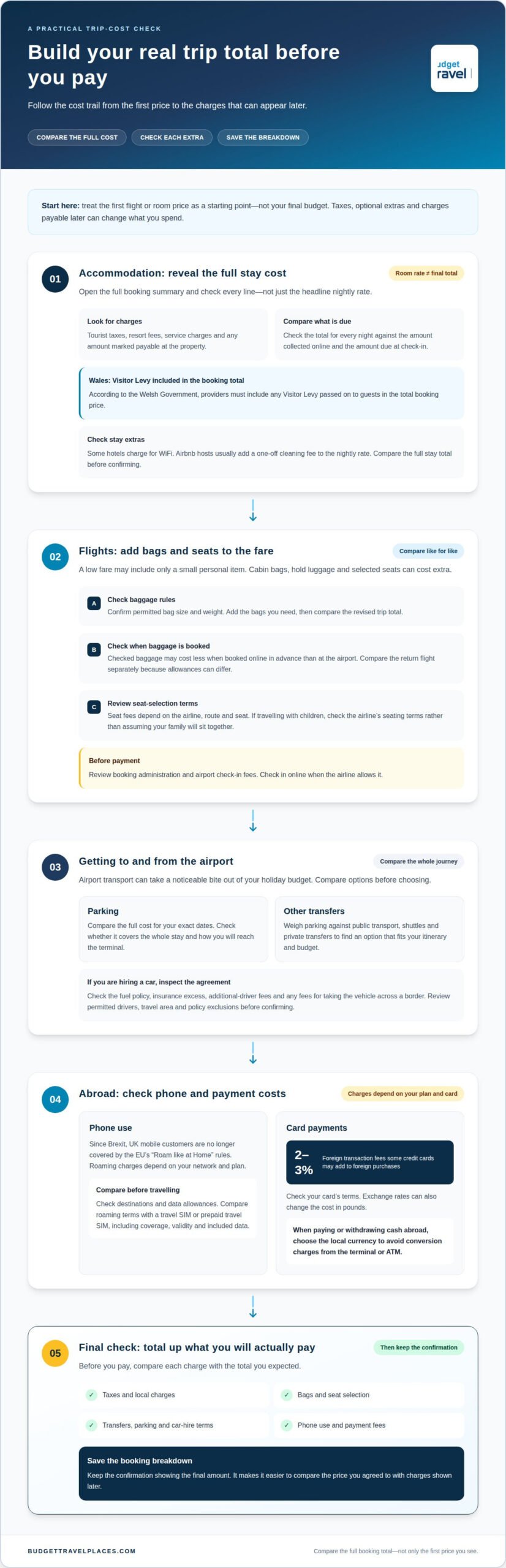
The price shown for a flight or room may not include every charge. Tourist taxes and local fees can be payable on arrival, and the amount may vary by destination and length of stay. To avoid hidden travel costs, compare the full booking total and check for possible extras such as airline baggage and seat selection, airport transfers, parking and overseas card payments. This guide explains what to check before you pay, including accommodation charges in Wales: according to the Welsh Government, providers must include any Visitor Levy passed on to guests in the total booking price.
Key Takeaways
- Check whether tourist taxes and local accommodation charges are included in the total, and review booking and airport check-in fees before paying.
- Compare airline fares with baggage and seat-selection costs included, and plan phone use abroad to avoid unexpected roaming charges.
- Weigh airport parking against public transport, shuttles and private transfers to find an option that suits your itinerary and budget.
- When paying or withdrawing cash abroad, choose the local currency to avoid conversion charges from the payment terminal or ATM.
- Use Budgettravelplaces.com’s budget travel guides and articles for practical ideas to plan a trip with fewer cost surprises.
1. Are tourist taxes and resort fees included in the price?
Not always. Tourist taxes, resort fees and other local charges may be payable on arrival, and the amount varies by destination and length of stay. Treat the first room or flight price as a starting point, not your final budget.
For accommodation in Wales, providers must disclose the total booking price, including any Visitor Levy passed on to the guest, according to the Welsh Government. For flights and accommodation elsewhere in the UK, compare the displayed price with the final payment breakdown. Look for mandatory charges separately from optional extras, such as seat selection or checked baggage.
Before paying, open the full booking summary and check each line for taxes, resort fees and service charges. Look for wording that says a charge is payable at the property, since it may not be included in the amount collected online. Compare the total for every night with the amount due at check-in, rather than relying only on the headline nightly rate.
Airport check-in and booking administration can add charges. Check in online when the airline allows it, and review the booking breakdown before payment for fees related to processing or payment. Save the confirmation showing the final amount. This makes it easier to spot any difference between the price you agreed to and charges shown later.
Departure fees and visa costs depend on the destination and trip. Check whether the destination requires a visa or charges visitors on entry or departure, then include those costs in your trip budget. Don’t assume they’re included in your flight booking. Travel insurance is a separate cost, too, so compare its price and cover with your overall holiday budget.
Paying by card abroad can involve foreign transaction fees. Credit cards that charge these fees may add 2% to 3% to foreign purchases. Exchange rates also change, affecting how much a charge in another currency costs in pounds. Check your card’s fee terms and compare the final sterling amount before accepting a conversion at checkout.
Families may need to choose between paying for adjacent seats and letting the airline allocate seats. Seat-selection fees depend on the airline, route and seats chosen. Check the seating terms for your booking, especially when travelling with children, and add any selected-seat charges to the total before paying. Don’t treat a low fare as a guarantee that your family will sit together.
Car hire costs can include fuel, an insurance excess, additional drivers and fees for taking the vehicle across a border. Review the rental agreement’s fuel policy, permitted drivers, travel area and excess before confirming. For travel insurance, read the policy exclusions and excess: an excluded claim or an excess payable by you can leave an unexpected bill. Check the relevant policy wording before purchase.
2. What hidden travel fees do airlines charge?
A low flight price may include less luggage than you expect. Many low-cost airfares include only a small personal item, while cabin bags and hold luggage cost extra. Before booking, check the permitted bag size and weight, then compare the trip total with each bag added. A higher fare that includes luggage may work out cheaper than adding bags later.
Timing matters. Airlines may charge less for checked baggage booked online in advance than at the airport. If you need a hold bag, add it while reviewing your booking, then compare the revised fare with other options. Check the return flight separately, too: baggage allowances and included extras can differ between airlines or fare types on the same journey.
Seat selection can raise the price, especially for families hoping to sit together. Airlines may charge for choosing seats in advance, with fees depending on the airline, route and seat. Some airlines automatically seat families together, particularly when travelling with young children, but don’t assume this applies to every booking. Review the seating terms and consider the total cost before selecting seats.
Using your phone abroad can lead to an unexpected bill. Since Brexit, UK mobile customers are no longer covered by the EU’s “Roam like at Home” rules, so roaming charges depend on your network and plan. Check which destinations and data allowances are covered before travelling. A travel SIM or prepaid travel SIM may suit a trip across several countries. Compare coverage, validity and included data with your roaming terms before choosing.
Accommodation extras can also change the final bill. Some hotels charge a daily rate for WiFi, while Airbnb hosts usually add a one-off cleaning fee to the nightly rate. Check the full stay total and look for separately listed charges before confirming. A cleaning fee affects a short stay differently from a longer booking, even if both show the same nightly price.
Tips and service charges vary by country and setting, so research local expectations before setting your daily budget. For example, a 15-20% tip on the pre-tax food bill is described as normal in US restaurants. Don’t apply that custom automatically elsewhere. For a tour, gratuities of 10-15% of the total cost per person are described as common in most cases.
To stop the cheapest-looking option becoming expensive, compare the final amounts for your flight, luggage, seats, accommodation and phone use. Read each charge before payment and save the booking breakdown. This helps you spot extras early, decide which are worth paying for and leave more of your holiday budget for exploring.
3. How much do airport transfers add to a holiday?
Airport transport can take a noticeable bite out of your holiday budget, especially when parking spans a longer trip. Compare the full parking total with other transport options before choosing. Planning parking and transfers in advance can help you avoid hidden travel costs.
Parking prices depend on the airport, dates and type of space. A pre-booked package may cost less or more than turning up on the day, so compare the final amount for your exact travel dates. Check whether the option covers the whole stay and how you’ll get from the car park to the terminal. Add any transfer between the parking area and airport to your budget.
Driving someone to the terminal can also incur a charge. Most airports charge for using designated drop-off zones, so check the airport’s drop-off arrangements before setting out. When checking flight times with the airline, allow for possible delays or changes as you decide when to arrive. Don’t assume a quick drop-off is free or included with your parking booking.
At your destination, compare public transport, shared shuttles and private transfers. Public transport may suit a solo traveller with light luggage, while a shared shuttle can spread the journey cost across passengers. A private transfer is typically the most expensive option, but may be more convenient for families or late arrivals. Weigh the cost against your group size, arrival time and final destination.
Timing can change the value of each option. Public transport may be more expensive during peak business-travel hours, so check the fare for the time your flight lands. A late arrival may also mean fewer practical transport choices. To avoid hidden travel costs on arrival, compare the options available for your landing time and route. Before paying by credit card, review the transfer booking’s total and its terms for separate charges related to luggage or passenger needs.
Planning ahead is especially useful for ski trips. Pre-booking ski transfers can help avoid last-minute costs and uncertainty, particularly when you need to reach a resort after landing. Match the transfer time to your flight arrival and allow for the journey from the airport. For other holidays, compare the transfer destination and waiting arrangements with your accommodation location.
Include airport transport in your trip total instead of treating it as an afterthought. Add parking, drop-off, onward travel and any transfer to your accommodation, then compare the amount with the convenience offered. Airlines and accommodation bookings may show separate prices, so check whether transport is actually part of a package. A clear transport plan means fewer surprises between the terminal and your first stop.
4. Choosing local currency when paying abroad
At a card terminal abroad, you may be offered a choice: pay in pounds or the destination’s local currency. Choose local currency when paying by card or withdrawing cash to avoid hefty conversion charges. If you select pounds, the terminal or cash machine may convert the amount before your card provider processes it. That exchange rate can affect the final sterling cost, so don’t assume the displayed pound amount is cheaper.
Take a moment at the payment screen. Check the selected currency before tapping your card or entering your PIN. If the screen offers “pay in GBP” or “pay in local currency”, select the local option. The same choice may appear at a restaurant, hotel reception or tourist attraction. For example, have a bill in euros charged in euros rather than converted to pounds at the till.
Cash machines can present the same choice when you withdraw money. Read each screen before accepting the transaction, since the conversion option may appear after you enter the amount. Select the local currency and review the amount requested before confirming. If you need cash on arrival, withdraw only what suits your plans, then use card payments for other purchases where practical.
Your card provider’s exchange rate and any foreign transaction fee are separate factors. Check your card terms before leaving the UK, and note how the provider handles purchases in other currencies. Paying in local currency avoids the terminal’s conversion choice, but it doesn’t remove charges set by your card provider. Keep that distinction in mind when budgeting for meals, transport and accommodation.
When exchanging cash, compare how much local currency you’ll receive, not just the headline rate. Ask how fees affect the final amount, and compare options before exchanging a large sum. At your destination, keep receipts for card payments and cash withdrawals. They help you match purchases against your account later, especially after visiting several places or paying in different currencies.
A simple routine helps you stay in control: choose local currency, check the payment total and keep a record. If you arrive late or feel rushed, pause before confirming a terminal prompt. Do the same when paying a hotel deposit or settling a bill. Take a moment with each payment, so you can focus more on exploring than puzzling over an unfamiliar exchange screen.
Budgettravelplaces.com: Budget Travel Guides and Articles
Budgettravelplaces.com offers budget travel guides and articles to help you plan affordable trips with fewer surprises. Turn to these practical reads when you’re weighing destinations, looking for lower-cost places to stay, or shaping a holiday budget around the extras covered here. Use the guidance to plan your own priorities, from transport and accommodation to everyday spending, while leaving room for memorable experiences. Whether you’re mapping out a couple’s escape, a family break or a backpacking adventure, a little preparation can help your money go further. For more ideas on affordable travel, explore the guides and articles, and contact Budgettravelplaces.com if you’d like to get in touch.
Make room for the trip you want
A holiday budget is more useful when it leaves room for the experiences you’re looking forward to, not just the bookings you’ve already made. As you plan, allow some flexibility for changing plans, an unexpected local outing or a special meal. Keeping costs in view doesn’t have to mean missing the moments that make a destination memorable.
Budgettravelplaces.com’s travel tips are shaped by a team of experienced travellers, helping you make practical choices while planning your next adventure. Use the ideas in this guide as a starting point, then tailor your plans to the places and experiences that matter most to you. Small, thoughtful decisions can help you avoid hidden travel costs and spend with more confidence.
Have a question as you plan? Contact Budgettravelplaces.com and take your next step towards a trip that feels exciting and manageable.
Frequently Asked Questions
Are tourist taxes and resort fees included in the price?
Not always. Some destination charges are collected at the accommodation rather than during online booking. Before confirming, look for wording such as “payable at property” and check whether the final total includes charges for each night. If you’re staying in Wales, accommodation providers must disclose the total booking price, including any Visitor Levy passed on to guests, according to the Welsh Government. Keep your confirmation handy to check what you’ve already paid.
Can you be charged for airport check-in?
Yes, an airline may charge for checking in at the airport, depending on its booking terms. Complete online check-in if it’s available, and save your boarding pass to your phone or print it before leaving. For a family booking, make sure every traveller is checked in. This simple step can prevent an avoidable fee and a stressful queue before your flight.
Do airlines charge families to sit together?
Airlines may charge for selecting seats in advance, but some automatically seat families together, particularly when young children are travelling. The policy depends on the airline and booking. Check the seating information before paying for specific seats, and consider whether your family needs to sit together for the whole flight. If you book tickets separately, review how the airline handles seating across separate reservations.
Do airlines charge for cabin bags and luggage?
Some low-cost fares include only a small personal item, with cabin bags and hold luggage charged separately. Check the size and allowance attached to your exact fare, not just the airline’s general baggage page. A bag that fits one fare may cost extra on another. If you’re travelling with several bags, compare the full fare after adding the luggage you need.
How much do airport transfers add to a holiday?
The cost depends on your airport, destination, travel time and group size, so no single figure suits every trip. Compare public transport, shared shuttles and private transfers for the full journey to your accommodation. For a family, consider the total for everyone, not just a per-person fare. Include airport parking or drop-off charges if you’re driving to the terminal.
Is the cheapest flight always the best option?
No. A low fare may cost more overall once you add luggage, seat selection or transport to and from the airports. Compare flights based on the same needs, including the bags you’ll take and arrival times that work for your plans. A slightly higher fare with useful extras included may suit you better than paying for them separately. Check the final booking total before choosing.