
Memorable trips on a budget are within reach when you choose good-value destinations beyond the busiest hotspots, travel outside peak periods and spend on experiences that matter most to you. You could swap a crowded city centre for a quieter coastal town or countryside base anywhere in the world, then explore on foot and seek out free or low-cost activities.
You don’t have to sacrifice the moments that make a trip special to keep spending manageable. Flexibility with dates, transport and accommodation can leave more room for a scenic walk, a local meal or an unplanned stop along the way.
Here, you’ll find practical ways to travel more often for less, from choosing affordable accommodation and transport to finding budget-friendly destinations and activities around the world. You’ll also find tips for making choices that suit your plans, so you can build an escape that feels memorable without stretching your budget.
Key Takeaways
- Travel outside peak periods and stay flexible with dates to find better-value options.
- Compare accommodation and transport together, including nearby airports and onward public transport.
- Choose quieter destinations around the world and make room for walks, free exhibitions and other low-cost activities.
- Plan flights and activities ahead, then weigh any booking deal against the full cost and convenience.
- Use destination guides to spot affordable places and experiences beyond the busiest tourist hotspots.
1. Accommodation and transport options
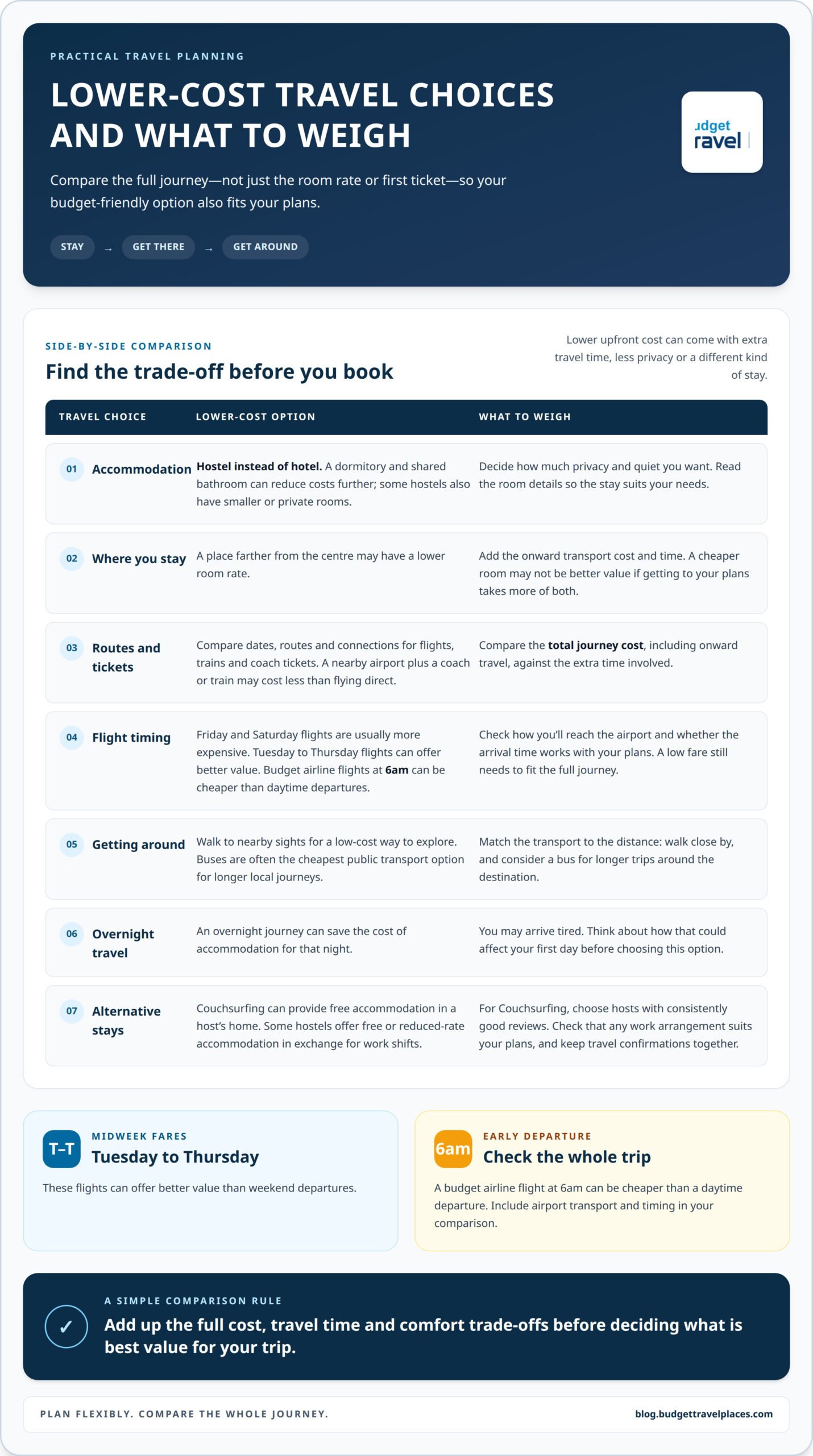
Set an accommodation spending limit before comparing rooms, then weigh location against the cost of getting around. Booking early can help you secure better rates, especially when your dates are fixed. If you’re comparing places farther from the centre, include the onward journey in your calculations. A lower room rate may not be better value if reaching your plans takes extra time and transport spending.
To find cheaper flights, trains and coach tickets, compare routes and travel dates, including journeys with connections. Check the total cost of reaching your destination, not just the first ticket. Flying to a nearby airport and continuing by coach or train may cost less than flying directly. Compare the extra travel time with the saving before you book.
Hostels can cost less than hotels, and some offer smaller or private rooms. If you’re happy to share, a dormitory and shared bathroom can reduce accommodation costs further. Consider what matters most: privacy, a quieter room or spending less on a bed to leave more of your budget for the trip. Read the room details carefully to make sure your choice suits your needs.
For a long journey, travelling overnight can save the cost of accommodation for that night. You may arrive tired, though, so consider how that could affect your first day. Once there, walking is a low-cost way to explore nearby places, while buses are often the cheapest public transport option. Use them for longer local journeys and walk to sights close to your accommodation.
Other low-cost stays require careful planning. Couchsurfing can provide free accommodation in a host’s home; choose hosts with consistently good reviews. Some hostels offer free or reduced-rate accommodation in exchange for work shifts. Make sure the arrangement suits your plans before relying on it, and keep your transport and accommodation confirmations together. Reviewing both before departure can help you avoid a missed connection or arriving without the details you need.
2. Budget-friendly UK destinations and activities
Build a UK break around experiences that don’t require a packed itinerary. A coastal walk, time in a public space or a free exhibition can make the day feel full without relying on several paid attractions. Choose a main activity, then leave room to explore nearby streets or scenery at your own pace.
Each season gives a destination a different feel. Spring and summer, from April to September, bring pleasant weather and festivals. Autumn visits from October to November offer foliage and fewer crowds, while winter from December to February suits cosy pub visits and festive celebrations. Choose the season for the experience you want, and leave room in your plans for changeable weather.
How can you plan a memorable weekend trip on a tight budget? Choose one base, pick a free or low-cost activity for each day, and focus on places you can explore at a relaxed pace. A clear priority, such as countryside scenery or local culture, helps you avoid adding activities just to fill the schedule.
Free exhibitions are a useful starting point for a culture-filled day. Find one that matches your interests, then plan a self-guided walk through nearby streets or public spaces. Check the exhibition’s opening details before setting out, and note another nearby stop in case you have extra time. This gives the day structure without requiring a string of ticket bookings.
Walking tours can introduce you to a city’s landmarks and stories. Free walking tours are one option, and tipping at the end is customary. If you’d rather explore independently, choose a few sights and map a route between them. Pause for photographs, local architecture or a rest instead of rushing from stop to stop.
For a countryside outing, make a natural feature the focus of the day. A UK waterfall plunges 60 metres into a glacial valley, offering a striking example of scenery to seek out. Plan a walking route around the landscape, and allow time to enjoy the view instead of treating it as a quick stop.
Ask local people, such as hostel reception staff, for ideas on places to eat, drink and visit. Their suggestions can lead you to experiences that match your interests, from a relaxed meal to a scenic walk. Combine a recommendation with a free exhibition or outdoor route for a simple plan with room for discovery.
For memorable trips on a budget, choose activities that make the destination itself part of the day. A walk, a local story or a seasonal event can become the highlight without making every hour revolve around a paid attraction.
3. Booking flights, attractions and tours
Compare flight dates before choosing an itinerary. Flights on Fridays or Saturdays are usually more expensive than flights on other days, so include midweek options in your search. Budget airline flights at 6am can be cheaper than daytime departures. Before booking, consider how you’ll reach the airport and whether the arrival time works with your plans. A low fare is more useful when the full journey fits your schedule.
When is the cheapest time to travel? Flights from Tuesday to Thursday can offer better value than weekend departures, which are usually more expensive. Compare flexible dates across the midweek period, then weigh the full journey rather than choosing by fare alone.
For attractions, decide which experiences need a set entry time and which can stay flexible. Booking activities in advance can sometimes offer discounted rates and give your day more structure. Start with the attraction you most want to see, then leave time around it for meals, travel and a slower visit. Keep booking confirmations together so entry details are easy to find.
A city pass may suit you if you plan to visit several included attractions and use public transport. Passes are usually available for periods starting at 24 hours, and often include attractions and transport. Before buying one, list the places you genuinely want to visit and check how well they fit the pass period. Compare that plan with separate tickets, and count only experiences you would choose anyway.
For a day trip, weigh an organised tour against arranging the outing independently. If public transport reaches the attraction, you could take a picnic and buy your own entry ticket instead of booking an excursion. A tour may suit you better when its itinerary, transport or guided experience matters. Compare what each option includes, then choose based on the day you want, not just the format.
Make booking decisions in a simple order. First settle your dates and flight times, then decide which attractions need advance reservations. Next, check whether a pass covers your planned visits and transport. For an excursion, map the route and confirm that public transport serves the starting point. This helps you avoid tickets that clash with arrival times or an itinerary that leaves too little time at the main attraction.
4. Choosing affordable destinations and avoiding tourist hotspots
Your destination can shape your budget before you book anything. Look beyond famous cities and resort centres around the world to places with a lower cost of living or a favourable exchange rate. Everyday spending, accommodation and meals may go further there, while local neighbourhoods can offer distinctive experiences away from the busiest sightseeing crowds.
Which city breaks offer the best value for international travellers? No city stays cheapest year-round, because fares, accommodation and exchange rates change. Compare the full cost of getting there and staying, then focus on destinations where everyday costs and activities suit your budget.
Start with a shortlist, not one must-visit hotspot. Use destination guides to compare typical costs, accommodation choices and things to do. A city with a low flight fare may still strain your budget if rooms and meals are costly. Consider the entire trip, including local transport and the experiences you want.
Tourist hotspots often concentrate visitors around a few central streets and headline attractions. Instead of staying beside the best-known landmark, consider nearby districts with transport links and everyday shops. You can still visit famous sights while choosing a base that makes it easier to explore local cafés, markets and quieter streets. Check walking distances and transport routes before deciding.
Exchange rates affect how much your spending buys abroad. Compare destinations using the same practical basket: a night’s accommodation, a meal, local transport and an activity. This won’t predict every cost, but it’s a fairer starting point than comparing flight fares alone. Revisit the comparison once your travel dates are settled, since fares and room availability can change.
Look for experiences that belong to the place, rather than building every day around paid attractions. A self-guided route through a historic centre, a public park or a local market can give your trip character. Choose destinations where these places are easy to reach, so your itinerary doesn’t depend on repeated long journeys across town.
For a practical shortlist, write down what matters most: architecture, coast, food, nature or nightlife. Match each interest to places with accessible sights and a range of accommodation options. Then compare the journey, stay and daily plans together. This makes it easier to spot destinations that feel special without paying a premium for a famous name.
Use destination ideas for affordable trips to shape your shortlist, then compare the places that fit your interests and spending plan.
The best-value city break depends on your dates and plans. Compare lower-cost destinations by the combined cost of travel, accommodation and daily activities, rather than choosing by airfare alone.
Budgettravelplaces.com: Budget Travel Guides and Articles
Budgettravelplaces.com publishes budget travel guides and articles to help turn savings ideas into a trip plan. If you’re weighing a quieter destination against a busy hotspot or comparing accommodation options, explore our guides to affordable places, low-cost stays and practical ways to manage spending.
Our guides are useful when you’re starting with a budget rather than a fixed itinerary, or looking for fresh ideas for a weekend away. Browse tips on transport, activities and destinations, then shape your trip around the experiences that matter most to you.
Browse Budgettravelplaces.com for practical ideas to plan an affordable escape.
Make room for your next adventure
Before choosing dates, decide what you want to remember: a quiet morning by the coast, a shared meal in a new city or a long walk through unfamiliar scenery. That choice gives your planning a personal focus, so your budget supports experiences that matter to you rather than filling every moment with extras.
Keep your first plan flexible. A shortlist of destinations and a clear sense of your priorities can help you spot a better fit as you compare options. With thoughtful choices, memorable trips on a budget can feel personal, relaxed and full of discovery.
Budgettravelplaces.com offers Budget Travel Guides and Articles to help you find ideas for your next escape. Explore ideas with Budgettravelplaces.com, and take the first step towards an adventure that feels like yours.
Frequently Asked Questions
How can I travel more often on a budget?
Make shorter breaks and nearby destinations part of your travel plans instead of waiting for one major holiday. Set aside a regular amount for travel, then use it for journeys that fit your time and budget. A weekend in a nearby town can still feel like a proper escape. Keep a list of places you’d enjoy visiting, so you can act when suitable dates and transport options come together.
How do I budget for my dream vacation?
Start by describing the trip you want, then divide its expected spending into transport, accommodation, meals, activities and a cushion for changes. Research each part for your chosen dates before deciding how much to save. If the total feels too high, adjust one choice at a time, such as shortening the stay or swapping a paid activity for a free experience. Keep your savings separate from everyday spending to track your progress.
How to be a frugal traveller?
Be deliberate about what deserves your money. Choose one or two experiences that matter most, then keep less important parts simple. For example, enjoy a special local meal but pick up breakfast from a supermarket, or spend on a memorable event while exploring the surrounding area on foot. Pack only what you need to avoid unnecessary luggage costs, and track your spending so small purchases don’t quietly crowd out your plans.
How to make travel dreams come true?
Turn a broad idea into an achievable first step. Choose a destination, decide what you most want to experience there, and work backwards to set a savings goal and realistic timeframe. If the full trip seems out of reach, plan a shorter version or focus on one part of the itinerary first. Sharing the plan with a travel companion can also help you agree on priorities, dates and the kind of trip you both want.
What are the best memorable budget trips?
The best choice depends on what you enjoy and how much time you have. For a short break, consider a nearby coastal or countryside escape; for a longer holiday, compare destinations within reach by travel time, accommodation and daily activities. Look beyond headline fares and consider the entire journey, including transfers and local transport. Choose somewhere with experiences you value, rather than a destination simply because it seems popular or affordable.
Which affordable destinations offer memorable experiences?
Look for coastal towns, market towns and countryside bases where scenery and local character are part of the appeal. The right fit depends on whether you prefer seaside walks, historic streets or outdoor routes. Before choosing, explore what you can enjoy nearby without filling your schedule with paid attractions. A destination with easy access to public spaces, local food and walking routes can make a simple break feel distinctive and rewarding.