
Practical ways to save money travelling include setting a spending limit, comparing flight dates and fares, watching for accommodation fees, and planning how you’ll pay before you leave; if you’re driving your own car abroad, review your policy’s overseas cover, as it may limit cover by trip length or reduce it to third-party only. Card purchases abroad can add fees of up to 2.99%, while cash withdrawals can add up to 5%, so preparing your travel money matters as much as finding a good fare. Compare shoulder-season dates, see whether separate one-way flights work out cheaper, and consider the full cost of a stay, not just its nightly rate. This guide shares practical ways to manage your spending, compare flights, avoid accommodation charges and prepare your money, with tips on choosing when to travel and handling payments abroad. Make a few smart choices before you go, and you can keep more of your budget for the experiences that make the trip memorable.
Key Takeaways
- Consider overnight travel to make your journey work harder and potentially reduce the number of nights you need accommodation.
- Compare travel dates and separate one-way fares with a return ticket before choosing your flights.
- Look beyond the advertised room rate: include booking charges and other accommodation fees when comparing stays.
- Arrange currency before departure and choose to pay in the local currency when using your card abroad.
- Check your mobile roaming charges before you travel, especially if your trip takes you outside the EU.
1. What’s the best way to manage money while travelling?
One of the most practical ways to save money travelling is to set a budget by category before you book. Divide your spending between transport, accommodation, meals and activities, then decide which costs you can adjust. If a central hotel stretches your budget, compare it with a guesthouse farther out and include the cost of local transport. Record totals in pounds and the destination’s currency so the exchange rate doesn’t obscure the real cost.
Plan your arrival and departure times around paid nights. Arriving in the morning and leaving at night can give you more time at your destination without paying for extra accommodation, provided the transport schedule works. An overnight journey may replace a night in a room, but compare its ticket price and timing with a daytime trip. Include onward transport, especially if the airport or station is far from your accommodation.
Is it cheaper to book flights and hotels separately or as a package holiday? Neither is always cheaper. Compare the package total with the cost of separate flights and accommodation, including baggage, transfers and booking fees shown before payment. Separate bookings may offer more choice, while a package can make the total easier to see at a glance. Use the same dates and room requirements for a fair comparison.
Flexibility can help your budget. Travelling in the shoulder season, just before or after a destination’s busiest period, can mean lower flight and accommodation costs and fewer crowds. For a longer stay, compare weekly and monthly rates: a month or more of accommodation can have a lower nightly rate than short-term bookings.
Look beyond hotels when searching for affordable accommodation. Compare hostels, guesthouses, campsites and longer-stay rentals, then check what each option includes. House and pet sitting can provide accommodation in exchange for caring for a property or its owner’s pet. Review booking terms for cleaning charges, deposits and cancellation conditions. A low advertised rate can still come with extra costs.
When considering ways to save money travelling, compare everyday food costs as well as room rates. In many destinations, lunch menus cost less than dinner menus, so have your main meal earlier if it suits your plans. Choose accommodation with kitchen access to prepare a simple breakfast, or buy food at a local market instead of eating every meal near a tourist attraction. That can leave more of your budget for activities.
2. Booking deals and comparing flight costs
Compare fares across several travel dates before choosing a flight. Search nearby airports too, but include the transport to each airport, journey time and any overnight stay. A cheaper flight from a distant airport may cost more overall once you add the return journey.
How can you find cheap flights, including budget airlines and nearby airports? Search budget airlines alongside other carriers, then compare nearby airports and flexible dates. Check the final booking total, including baggage and seat charges, and add transport costs before deciding.
Use flight price alerts to track a route while you consider your dates. Set alerts for your destination and nearby airports, then compare fare changes with your preferred travel times. If you find a suitable price, check the airline’s booking page for the final fare and conditions. Compare one-way tickets with a return booking too: the lower advertised price may change once baggage or other charges are added.
Compare the whole journey, not just the flight. For example, arriving late may mean paying for a taxi or an extra night near the airport. Check whether public transport runs at your arrival time and include the cost of getting to your accommodation. Airline membership schemes can also factor into your decision, but weigh any fee against benefits you’ll actually use.
Arrange travel insurance as soon as you’ve booked your trip, and compare policies rather than travelling without cover. Check what each policy covers, its exclusions and the insurance excess you may need to pay towards a claim. A valid European Health Insurance Card can provide access to state healthcare free or at a reduced cost in Europe, and some insurers require one. It doesn’t replace travel insurance, so consider both when planning your cover.
Airport parking can change the cost of a UK departure. Compare parking options with public transport, and include the return journey in your calculation. Some car parks away from the airport provide transport to and from the terminal; others collect and return your car at the airport. Check the parking location, transfer arrangements and booking conditions before choosing. For more practical budget travel planning ideas, bring your flight, insurance and airport costs together before you book.
3. How can I avoid hidden fees when booking accommodation?
Look beyond the nightly accommodation rate and calculate the full booking total. Before paying, review the price breakdown for cleaning charges, local taxes, deposits and payment fees. Compare the same dates and room type across your options. A low advertised rate may not be the best value if added charges increase the final amount.
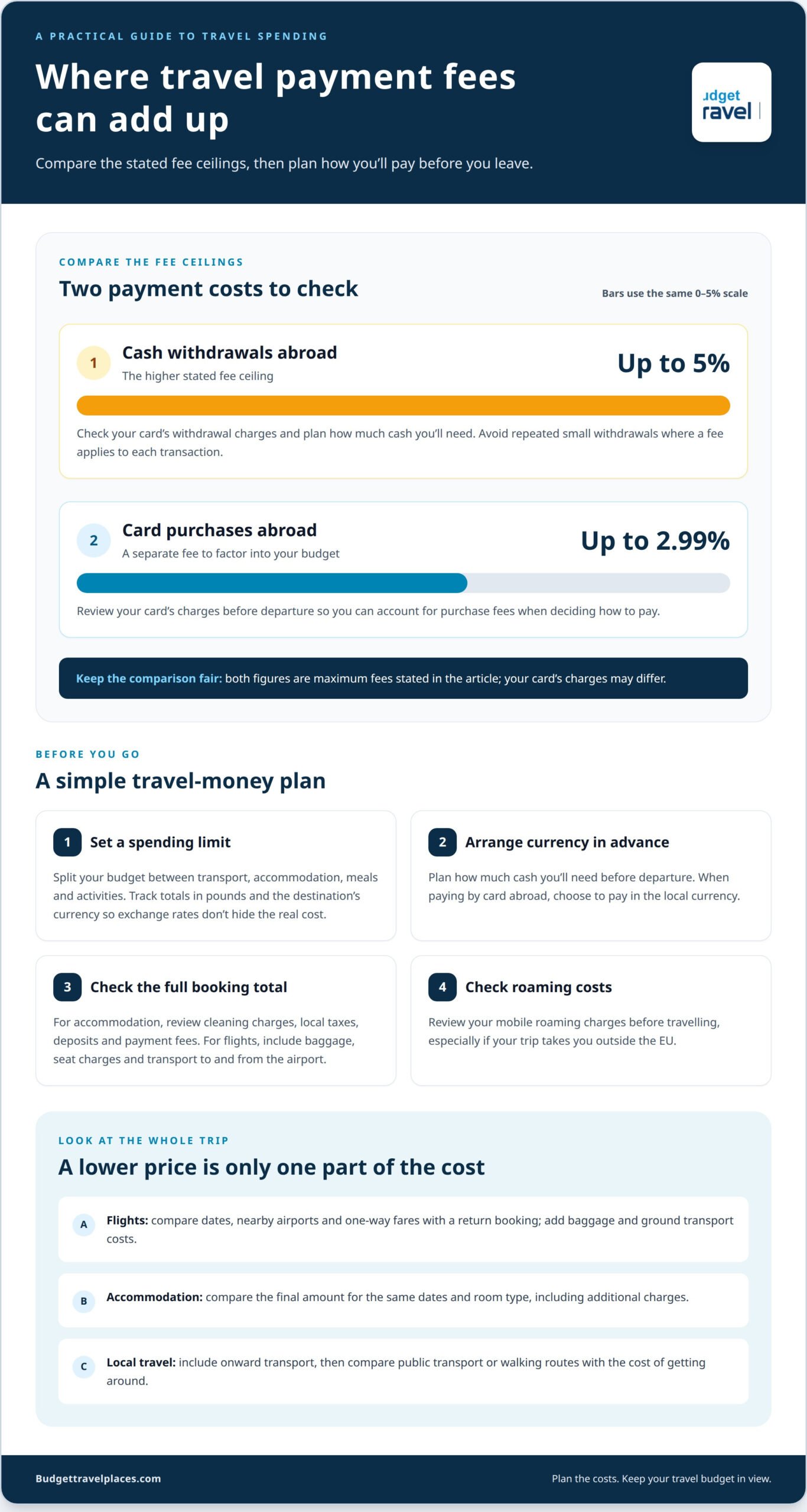
Paying abroad can add another cost. Credit and debit card purchases abroad can incur fees of up to 2.99%, while cash withdrawals can carry fees of up to 5%. Check your card’s charges before departure and plan how much cash you’ll need. Avoid repeated small withdrawals where fees apply to each transaction.
Walking and public transport can help keep local travel costs down. Once you arrive, group nearby places into one walking route, then use buses, trams or trains for longer journeys. Compare a day pass with separate fares for your planned trips. The best option depends on how often you’ll travel and which areas the pass covers.
For a UK train journey, are railcards and advance tickets worth it? They can be worthwhile when the discount or lower fare outweighs the upfront cost and suits your travel plans. Compare ticket conditions and journey times, especially if your plans might change.
Airport transfers can add hidden costs to a cheap flight or hotel. Before booking, compare public transport, a pre-arranged transfer and a taxi, including the journey to your accommodation. Check arrival times against transport schedules. A late landing may leave fewer options, while a hotel near a transport link could make the whole trip simpler.
How can you avoid baggage fees, roaming charges and other travel add-ons? Pack within your ticket’s baggage allowance, and check mobile roaming charges before leaving, especially for destinations outside the EU. Review the booking summary for optional extras and remove anything you don’t need before paying. This helps keep the final charge closer to your planned spending.
Budget travel can involve cancellation and transfer risks if plans change or transport runs late. Read accommodation cancellation terms before booking, and check whether your flight arrival leaves enough time for the onward transfer. If a fare requires an extra bag or a costly airport journey, include those expenses before deciding. Card or membership rewards can help, but count them only if you can use them without spending extra.
4. Preparing travel money
Plan your travel money before leaving the UK. Estimate what you’ll spend on meals, local transport and activities, then decide how much to carry as cash and how much to pay by card. Research the destination’s usual payment methods and currency so you’re not forced into a costly exchange at the airport. Keep a record of planned spending in pounds and the local currency.
Arrange currency exchange before departure. Airport exchange firms may offer poor exchange rates and charge commission, so compare the rate and any fees before changing money. The Post Office says 7,000 branches can sell euro notes. If you’re travelling in Europe, decide how much cash you’ll need for your first day, then exchange only an amount that suits your plans. Avoid exchanging more than you expect to spend.
Check foreign transaction and cash withdrawal fees on your credit and debit cards before travelling. Where possible, use a card with lower charges for purchases, and withdraw cash less often if each withdrawal incurs a fee. At a card terminal or cash machine abroad, choose the local currency rather than pounds sterling. The retailer’s conversion may use a less favourable exchange rate.
A prepaid currency card can help you set aside travel funds in advance, but read its terms carefully. Look for charges for loading money, withdrawing cash, inactivity or using the card in a different currency. Check how its exchange rate is set, too. A card that seems cheaper at first may cost more if several charges apply to how you use it.
Include mobile costs in your travel budget. Check your provider’s roaming charges before leaving, especially for destinations outside the EU, where data use can lead to large bills. Turn off background data when you don’t need it, and use Wi-Fi where practical. If you plan to use mobile data abroad, compare the available options before departure and choose one suited to your destination and expected use.
Rewards can stretch your budget when they apply to purchases you already planned. Some credit cards let you earn air miles that can be redeemed for flights and hotel stays. Read the card’s fees and redemption terms, and don’t spend extra just to collect points. Treat rewards as a bonus, not a reason to carry a balance or choose a more expensive booking.
Build your plan around exchange rates, card charges and the way you’ll pay at your destination. For more practical ideas before your next trip, explore budget travel guides.
Budgettravelplaces.com: Budget Travel Guides and Articles
Budgettravelplaces.com offers Budget Travel Guides and Articles to help you plan affordable trips with practical ideas for destinations, low-cost accommodation and everyday savings. Turn to these guides when you’re choosing where to go, shaping a realistic budget or looking for ways to make your spending go further. Use them alongside the steps above to compare the full cost of a trip, from getting there to finding a place to stay. A little research can help you focus your budget on the experiences you’re most excited about, whether that’s exploring a city or finding a quieter corner of a country. For more inspiration as you plan your next adventure, contact Budgettravelplaces.com.
Make your next trip your own
A travel budget isn’t just a limit. It helps you choose what matters most, whether that’s a longer stay, a special meal or an extra day exploring. Set a priority for your next holiday, then shape your plans around it. That small decision can make careful spending feel personal rather than restrictive.
The most useful ways to save money travelling are the ones that suit your pace and plans. Keep your budget flexible enough for the experiences you value, and revisit it as your itinerary takes shape. Budgettravelplaces.com offers practical, budget-conscious ideas to help you plan memorable trips.
Ready to plan your next adventure? Start a conversation with Budgettravelplaces.com and take the next step towards a trip that feels right for you.
Frequently Asked Questions
Driving your own car abroad?
Before driving abroad, check your licence and include fuel, parking and road charges in your trip budget. According to the UK Government, driving with an invalid driving licence can lead to a fine of up to £1,000. Also consider whether driving fits your itinerary: a car can help you reach places beyond public transport routes, but it may sit unused during a city break. Compare the likely full journey cost with other transport options.
How can I avoid hidden fees when booking accommodation?
Compare the amount due for your whole stay, not just the displayed nightly rate. Use the same dates, number of guests and room type when comparing places, then review what the price includes. For example, a room with breakfast may suit your plans better than a lower rate that excludes meals. Check the payment and cancellation terms too, so you understand what happens if your plans change.
Is it better to book tours in advance or on arrival?
Book in advance when a tour has a fixed date, limited places or a key role in your itinerary. This can help you plan around timed activities and transport. Waiting until arrival may suit you better if your schedule is flexible or local weather could affect your plans. Before committing, compare what the booking includes, where the tour starts and its cancellation terms.
What are some budget-friendly destinations?
Look for destinations where accommodation, meals and local transport fit your budget, rather than judging affordability by flight cost alone. Compare the full trip from the UK, including how you’ll get around and what you hope to do. A lesser-known destination with affordable stays may offer better value than a famous city during its busiest season. Your travel dates and preferred activities can help determine which place suits you best.
What’s the best way to manage money while travelling?
Set a trip budget by category, then keep a simple record of your daily spending. Separate essential costs, such as accommodation and transport, from flexible spending on meals and activities. Carry a payment method for everyday purchases and keep a backup option separate. If you’re travelling with someone, agree how you’ll split shared costs, such as meals or taxi rides, in advance.
What is the cheapest time of year and day to travel from the UK?
The shoulder season, just before or after a destination’s busiest period, can bring lower flight and accommodation costs. For a classic summer destination, September is one example. Starting a trip before Friday may also reduce airfare and hotel costs. Flexibility is key.