
The best cheap European destinations may be just beyond the famous names. Choose Seville or Valencia instead of Madrid or Barcelona, or head east to discover budget-friendly cities across Central and Eastern Europe. Their culture, historic streets and memorable meals can make a city break feel rich without a luxury budget.
If you’re watching every pound, you may wonder whether a rewarding escape means giving up the places you want to see. This guide shows how to swap the busiest, best-known stops for appealing alternatives and find destinations for different travel styles, from romantic weekends to family adventures.
Explore standout cities and regions, then get practical ideas for timing your trip and managing everyday costs. Shape an affordable European getaway around what matters most, whether that’s architecture, local food, coastline or a lively city break, and leave room for unplanned discoveries.
Key Takeaways
- Consider Seville or Valencia for a Spanish city break with a different pace from Madrid or Barcelona.
- Explore Eastern and Central Europe for historic cities, local food and budget-friendly ways to travel.
- Look beyond capital-city centres: staying in a suburb or nearby town can help you make your travel budget go further.
- Try travelling in spring or early autumn instead of peak summer to seek better-value stays and a more relaxed trip.
- Find lower-cost alternatives to popular destinations, from Croatia’s coast to quieter Greek resorts and southern Italy.
1. Affordable alternatives to Madrid and Barcelona
Seville and Valencia offer Spanish city breaks beyond Madrid and Barcelona, with culture, food and attractions to explore. They were presented among the 15 cheapest city destinations for travellers in 2026. Seville brings Moorish architecture and historic streets; Valencia pairs city sights with a Mediterranean coastline. Both give you a different base for discovering Spain without defaulting to its best-known cities.
Which low-cost airlines fly from the UK to affordable European destinations? Routes to Seville and Valencia depend on your departure airport and travel dates. Compare options from nearby airports and check the full fare, including baggage and travel from the airport to your accommodation.
For culture, add Córdoba to a southern Spain itinerary. Its Cathedral Mosque and Alcázar de los Reyes Cristianos offer two distinct historic sights in one city. Granada is another memorable stop, with the Alhambra among its best-known landmarks. In Valencia, explore the old town and visit a museum; in Seville, make time for Moorish architecture and lively public squares. These cities are appealing alternatives to a trip focused only on Madrid or Barcelona.
Which European cities have the lowest average daily travel costs? Individual costs don’t make up a complete daily budget, but they show how accommodation, food and local transport affect your spending. For a Spanish city break, compare these categories before choosing your base.
Valencia suits travellers who want a city and a beach in one trip. Seville is a good fit for historic streets, architecture and regional food, while Córdoba and Granada add cultural stops. To include the countryside, plan time beyond the city centre and build your route around the places you most want to see. In summer, Valencia’s coast offers a change of scene from inland Seville.
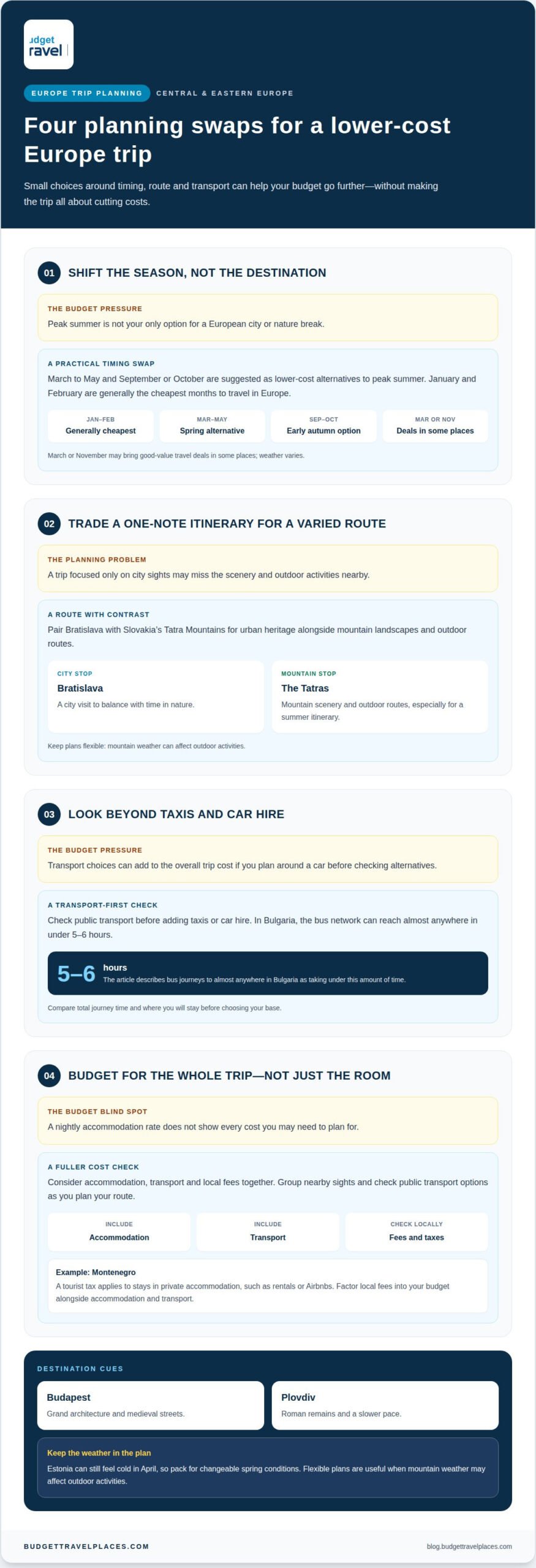
Timing can make a difference, too. January and February are generally the cheapest months to travel in Europe, while March to May and September or October are suggested as lower-cost alternatives to peak summer. If your dates are fixed for summer, compare Seville and Valencia based on the trip you want, then weigh accommodation, meals and attractions together rather than judging a destination by a single cost.
2. Budget travel in Eastern and Central Europe
Eastern and Central Europe combine beautiful scenery with heritage-rich cities, and careful timing can help your budget go further. Try Budapest for grand architecture and medieval streets, or Plovdiv for Roman remains and a slower pace. Spring, from March to May, and early autumn, in September or October, are suggested as cheaper alternatives to peak summer. March or November may also bring good-value travel deals in some places, though the weather varies.
For summer scenery, Slovakia’s Tatra Mountains offer a change from city breaks, with mountain landscapes and outdoor routes. Plan around the activities you want, then compare the cost of a city stay with time in the mountains. A trip combining Bratislava and the Tatras can balance urban heritage with fresh-air adventures. Keep your schedule flexible, since mountain weather can affect outdoor plans.
Base your travel budget on the full trip, not just the nightly accommodation rate. Decide which cities matter most, group nearby sights together and check public transport options before adding taxis or car hire. In Budapest, for example, the Parliament and historic streets can anchor a day focused on walking. In Plovdiv, check opening arrangements for the Roman Theatre and Ethnographic Museum before planning your route.
Bulgaria can work well for travellers who want to combine city visits with bus journeys. The country’s bus network can reach almost anywhere in under 5-6 hours, making it possible to connect places without planning every leg around a rental car. Compare the total journey time and where you’ll stay before choosing a base. In Plovdiv, spend time around the old town and Roman Theatre, then use the city as part of a wider Bulgaria itinerary.
Are there tourist taxes or local fees in budget European destinations? Yes, charges can apply. Montenegro levies a tourist tax for stays in private accommodation, such as rentals or Airbnbs. Include local fees in your trip budget alongside accommodation and transport, rather than treating the room price as the full cost.
Season matters beyond accommodation. Estonia can still feel cold in April, so pack for changeable spring conditions; September or October may suit travellers who prefer a quieter alternative to peak summer. In Bulgaria, pair a city stay with bus travel, while Slovakia’s Tatras suit a nature-led summer itinerary. For more practical destination ideas and planning tips, browse these budget travel guides as you shape your route.
3. Budget-friendly European city destinations
Riga and Tallinn are strong options for a city break with history, architecture and practical ways to manage costs. Riga was described as Europe’s cheapest city in 2025, with Tallinn ranked second-cheapest that year. In Riga, Art Nouveau façades add character to a walk through the city, while elevated viewpoints offer a fresh perspective on its rooftops. For travellers weighing up cheap European destinations, both cities offer memorable streets and sights without relying on a packed itinerary of paid attractions.
For a weekend, consider Riga, Tallinn or Porto. Riga and Tallinn appear in this guide’s recent affordability rankings, while Porto is recommended as a cheaper city break in Portugal. That fare is a snapshot, not a promise for every date, but it shows why departure airports and travel dates matter.
Accommodation and meal costs can rise in capital-city centres, so look beyond the most central streets. Staying in a suburb or nearby town may help you save, especially if public transport makes your chosen sights easy to reach. In Prague, look to the suburbs for cheaper places to eat instead of focusing every meal around the busiest tourist areas. You could also stay in a smaller town and visit the capital for a day.
Compare the whole holiday, not just the room. An accommodation deal may be less useful if reaching a castle, museum or evening restaurant takes extra time and transport spending. Group nearby attractions, choose a base that suits your plans and leave time for a walk through historic neighbourhoods. Riga’s Art Nouveau architecture, for example, makes for a memorable city experience without requiring every stop to be a ticketed attraction.
What are the cheapest beach destinations in Europe? Portugal’s western coastline is suggested as a lower-cost choice for a beach holiday, while Porto offers an affordable city break in the same country. Combine a few days in the city with time by the coast, then compare travel connections and accommodation locations before settling on an itinerary.
For a city-and-sea escape, look for places where you can enjoy both without changing accommodation repeatedly. Valencia has a beach alongside its urban sights, while Portugal’s western coastline suits a holiday focused more on the sea. Choose based on your priorities: Riga and Tallinn for architecture and city history, Porto for a city break, or Portugal’s coast for beach time. These cheap European destinations suit different travel styles, so match your choice to the experiences you want most.
4. Budget-friendly European countries and destinations
For UK travellers, a useful shortlist includes Bulgaria, Bosnia and Herzegovina, North Macedonia, and less-visited regions of Italy. These destinations offer different trip styles, from city sightseeing to coastal breaks and countryside escapes. The best budget option depends on what you want to do: Sarajevo suits history and food, while southern Italy offers island and coastal options. Compare transport, accommodation and activities together before choosing a base.
In Bosnia and Herzegovina, Sarajevo combines historic architecture with lively nightlife and a walkable old town. The Gazi Husrev-beg Mosque dates from 1530, giving you a landmark to anchor a visit around. In Bulgaria, Plovdiv offers Roman heritage, including its Roman Theatre, alongside historic streets and local restaurants. These destinations suit travellers who want cultural sights and an everyday city atmosphere rather than a holiday built around expensive headline attractions.
These examples show how meal costs can help distinguish destinations, but they don’t make up a full daily budget. Allow for accommodation, local transport and paid sights, too.
In Croatia, consider Zadar, Zagreb or Split instead of Dubrovnik for a cheaper stay. In Greece, quieter resorts can be alternatives to Athens, Santorini and Mykonos. In Italy, look south to Puglia, Campania, Calabria or Sicily rather than centring your trip on Rome, Milan or Venice. Sicily is a large island with varied stops, including Mount Etna, the Valley of the Temples and the coastal town of Taormina.
What are the cheapest European destinations for UK travellers? Consider Sarajevo, Plovdiv and Ostrava for city breaks, then compare southern Italy or quieter Greek resorts for a coast-focused holiday. There’s no single best fit for every trip: your total spending depends on your route, season, accommodation and activities.
Make your decision practical. Start with the experience you want, then choose a country and base that keep your route simple. For example, a Sicily itinerary could pair Taormina with the Valley of the Temples, while a Sarajevo stay could focus on the historic centre. For a beach holiday, compare a quieter Greek resort with Croatia’s Zadar or Split. Choose places that match your interests, then plan transport and accommodation around them. This approach helps you find affordable countries without assuming the most famous destination offers the best value.
Budgettravelplaces.com
Budgettravelplaces.com makes planning practical with Budget Travel Guides and Articles about affordable destinations, low-cost accommodation and money-saving travel tips. Use its guides when you’ve chosen a region, such as Central Europe, but want ideas for selecting a city, timing your visit or managing your budget across accommodation, food and transport.
Use these suggestions to shape a trip around what matters to you, whether that’s Riga’s architecture, a beach break in Portugal or Sarajevo’s historic streets. Compare your options with your travel dates and preferred pace to make a plan that feels manageable as well as inspiring.
For more ideas on affordable places to visit, contact Budgettravelplaces.com.
Turn your travel ideas into a plan
Your next trip doesn’t need to follow the familiar route. Start with the experience you want, whether that means slow mornings, lively evenings or room for spontaneous detours. Shape your plans around your priorities, keeping travel dates, location and everyday spending in view. The best cheap European destinations for you are the ones that make the journey rewarding and manageable.
Budgettravelplaces.com shares Budget Travel Guides and Articles informed by its team’s experience as avid travellers and budget-savvy explorers. Use this practical perspective to explore ideas and build a trip that suits your pace, travel companions and budget.
Ready to take the next step? Contact Budgettravelplaces.com today and keep your European travel plans moving. Your next memorable escape can start with one thoughtful choice.
Frequently Asked Questions
How much do flights from the UK to budget European destinations cost?
There’s no single fare for flights from the UK. The total depends on your departure airport, dates, destination and luggage. To plan realistically, compare the complete return journey, not just the advertised fare. Check whether your preferred dates have direct flights, and include the cost of reaching the departure airport and travelling from your destination airport to your accommodation. Flexible dates and airports can reveal more options.
What are typical accommodation prices in cheap European cities?
Accommodation costs vary by season, location, room type and how far ahead you book, so there’s no typical price for every city. A private room in a central district may suit couples or families, while a hostel bed can work for solo travellers. Compare places with practical access to your planned activities, then weigh the nightly rate against local transport costs and the time it takes to reach sights.
Which European destinations have the cheapest food and public transport?
For lower-cost travel, compare destinations such as Sofia, Sarajevo and Tbilisi, then consider food and transport together. Choose accommodation near the sights you plan to visit, and use public transport for longer journeys across the city. Local cafés and lunchtime menus can help you manage meal spending; markets are another option for simple snacks. These choices can matter as much as your destination.
When is the cheapest time of year to visit Europe?
January and February are generally the cheapest months to travel in Europe. For milder weather, consider travelling outside peak summer and compare spring or early autumn dates. The experience depends on your destination and activities: mountain trips, beach holidays and city sightseeing each suit different conditions. Before booking, match the season to your plans, not just the lowest fare.