
Affordable alternatives to tourist hotspots are destinations that offer a similar atmosphere, scenery or cultural experience to a famous place, often with more ways to manage your budget. Portugal, for example, can be an alternative to Spain, France or Italy. Staying flexible about where and when you travel can also open up more affordable options.
It makes sense to want to see famous sights, but busy destinations can put pressure on your budget and plans. Here, you’ll learn what destination dupes are, how flexibility can help you find them, and why Portugal is worth considering for a European escape.
From choosing a less-hyped base to shifting your travel dates, these practical ideas can help you spend less without missing the culture, coastlines and memorable moments you came for.
Key Takeaways
- A destination dupe offers a similar atmosphere or experience to a famous place, giving you another option to consider.
- Flexibility with your travel dates and destination can open up more ways to manage your budget.
- Compare Myvatn Nature Baths with Iceland’s Blue Lagoon to see which experience best suits your trip.
- Portugal is worth considering alongside Spain, France and Italy for a European escape.
- Look beyond the headline attraction and weigh up the setting, activities and practicalities of each alternative.
1. What Are Destination Dupes?
A destination dupe is a place that offers some of the scenery, culture or activities associated with a better-known destination. It isn’t an identical substitute: Slovenia might appeal if you’re drawn to Alpine landscapes, while Estonia offers a historic European city break. Compare the experiences you value, then choose a destination that fits your budget and travel style.
For a European escape, consider Slovenia instead of building your plans around the most famous Alpine stops. It was named the world’s most sustainable country in 2017, and its towns, lakes and mountains give you several ways to shape a trip. In Estonia, Tallinn pairs medieval streets with museums and coastal highlights. Tallinn receives 4 million foreign visitors a year, so look beyond its busiest sights for a calmer stay.
Thailand can offer a different pace from its best-known temple routes and beach resorts. Sukhothai was Thailand’s first capital, and Si Satchanalai Historical Park is an hour from Sukhothai. Visiting both lets you explore historic sites without making every day about the same crowded landmark. For quieter beach time, choose a smaller Thai coastal town and plan around local transport and nearby facilities.
Which alternative destinations have good public transport and low-cost flights from the UK? Tallinn and Ljubljana are useful city bases to compare for UK flights. Plan onward travel around the public transport links serving your accommodation and the sights you want to see. Flight costs depend on dates, demand and airport, so compare a few travel days before choosing a destination.
How can travellers find affordable accommodation and activities in less-visited destinations? Start with a town such as Sukhothai or a base outside Tallinn’s busiest centre. Compare accommodation locations with bus, rail and walking routes. Make a shortlist of free or low-cost highlights, such as historic streets, parks and public viewpoints, before adding paid museum visits or excursions.
Responsible travel matters in popular destinations too. Venice receives around 60,000 visitors each day, so visit outside the busiest hours, respect residential streets and support local businesses. Avoid blocking narrow lanes for photographs, and follow site rules at historic landmarks. That helps protect the place you came to enjoy.
Are there safety, visa, accessibility or infrastructure issues to check before choosing an alternative? Yes. Review UK travel advice and entry requirements, then check transport access, accommodation facilities, medical services and mobile coverage along your route. In places such as rural Slovenia or smaller Thai beach towns, these practical details can shape your plans as much as the destination itself.
2. Travel flexibility and peak-season availability
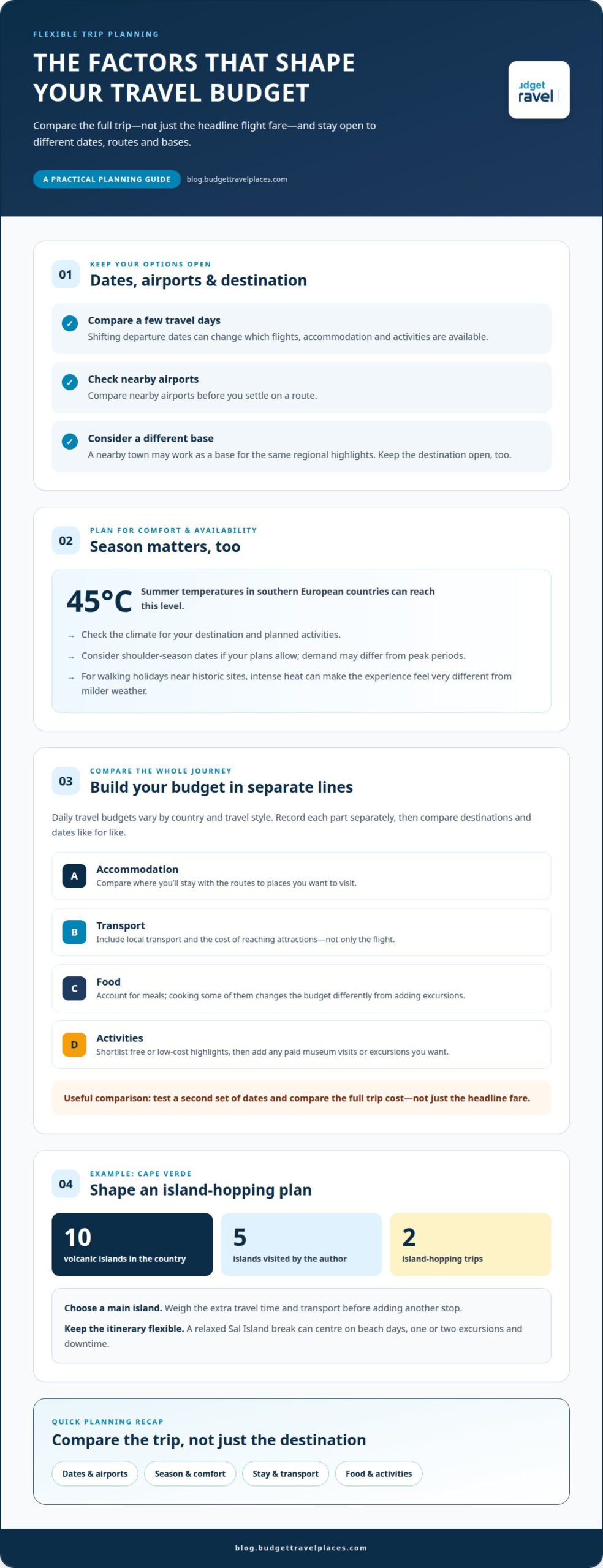
Shifting your travel dates can change which flights, accommodation and activities are available. Compare a few departure days and nearby airports before settling on a route. If your plans allow, consider shoulder-season dates, when demand may differ from peak periods. Keep your destination open, too: a nearby town can provide a useful base for the same regional highlights.
Season matters for comfort as well as crowds. Summer temperatures in southern European countries can reach 45°C, so travelling outside the hottest period may suit you better. Check the climate for your chosen destination and planned activities before booking. A walking holiday near historic sites, for example, may feel very different in intense heat than during milder weather.
Build sustainable habits into your plan. Carry a reusable water bottle and refill it where safe drinking water is available, rather than buying single-use bottles throughout the day. In Lisbon or the Portuguese countryside, look for refill points along your route. This small step can reduce disposable packaging and help you avoid repeated purchases.
Daily travel budgets vary by country and travel style. Estimates for Indonesia, India, Vietnam, Tunisia, Poland and Hungary use different local currencies, so compare like with like rather than treating one figure as universal. Accommodation, meals, local transport and paid attractions all affect the daily total. Cooking some meals or choosing public transport affects your budget differently from adding excursions.
Use a simple budget worksheet for each destination, recording accommodation, transport, food and activities separately. For example, compare a city stay in Poland with a beach-focused visit to Tunisia, including the cost of reaching each attraction. Then test a second set of dates. The most useful comparison is the full trip cost, not just the headline flight fare.
Cape Verde suits travellers who want an island adventure with room to shape the itinerary. The country has 10 volcanic islands, and the author visited 5 across two island-hopping trips. Choose a main island, then weigh the extra travel time and transport involved before adding another stop. A relaxed Sal Island break can centre on beach days, one or two excursions and downtime.
For a practical seasonal plan, pick your must-do activity first, then compare dates, transport and accommodation around it. If a famous coastal destination is crowded, consider a quieter nearby base and travel in for selected highlights. A budget travel guide can help you find more ideas for building a flexible itinerary.
3. Myvatn Nature Baths as an alternative to Iceland’s Blue Lagoon
Iceland’s Myvatn Nature Baths offer a northern option for travellers drawn to geothermal bathing. The Blue Lagoon is near Reykjavík, while Myvatn is in North Iceland, so the choice affects the wider holiday plan. Compare the whole trip, not just the bathing stop: flight route, transport, accommodation and nearby places all shape your experience. Don’t assume one option costs less without comparing prices for your dates.
Myvatn suits a trip built around outdoor activities and natural scenery. Lake Mývatn gives the region its name, and the surrounding landscapes offer a different experience from a stop near Iceland’s capital. Pair the baths with time to explore the wider area, rather than travelling north solely for one attraction. Consider how long you want to spend exploring and whether your accommodation makes those plans practical.
To compare the baths fairly, list what matters most to you. You might prioritise the setting, travel time, bathing experience or chance to see other Icelandic highlights. Then compare transport and accommodation for each option, including the cost of reaching the bathing site. If your itinerary already includes North Iceland, Myvatn may fit more naturally than a separate journey from Reykjavík.
Laos offers another kind of nature-focused alternative for travellers who want scenery and adventure beyond busy cities. Luang Prabang combines a historic town setting with opportunities to explore nearby landscapes, while Vang Vieng is known as a base for outdoor activities. Choose your places around the experiences you want, then factor in travel time between them. The best-value route is the one that avoids unnecessary transfers and lets you enjoy each region at your own pace.
For a Laos itinerary, choose one main base before adding extra stops. You could spend time in Luang Prabang, for example, then decide whether Vang Vieng suits your interests and schedule. Compare accommodation locations with transport links and planned activities. This gives you a clearer picture of the whole holiday than choosing destinations from photographs alone.
There’s no single dupe that suits every traveller. Venice might appeal for historic streets and waterways, while a geothermal break in Iceland offers a very different kind of escape. Decide which part of the famous destination you want to experience, then look for places that deliver that feeling and suit your trip. A destination alternative works best when it brings together the scenery, activities and practical travel plans you actually want.
4. Portugal as a lower-cost alternative to Spain, France and Italy
Portugal is worth comparing if you want a European holiday with history, culture and coastlines. Lisbon, Porto and the Algarve offer different trip styles, from a capital-city stay to a beach break. If you’re considering affordable alternatives to tourist hotspots, compare Portugal with the specific destinations on your shortlist rather than assuming one country always costs less.
Start with the experience you want. If Barcelona appeals for city life and coastal access, compare it with Lisbon and nearby coastal towns. If you’re drawn to Italian history, consider Porto or Coimbra for architecture, museums and local food. These destinations won’t recreate Spain or Italy, but they offer their own heritage, atmosphere and activities.
Portugal’s national monuments, museums and UNESCO-listed heritage give you plenty to plan around. In Lisbon, combine historic neighbourhoods with museums and viewpoints; in Porto, explore the riverside setting and historic centre. Choose a few paid attractions, then leave time for walking and discovering public squares. This mix can help you shape a full itinerary without making every day depend on ticketed sights.
Food choices also affect your trip budget. Traditional cafés, local restaurants and grocery shops give you different ways to plan meals. Compare the choices you’d actually make in Portugal with those in France, Spain or Italy. A café breakfast, supermarket lunch and sit-down dinner create a different daily spend from eating in restaurants throughout the day.
Next, map your accommodation against the places you want to visit. A Lisbon stay focused on the capital differs from a route that also includes Porto and the Algarve. Travelling between regions takes time and adds transport costs, so fewer bases may suit a shorter holiday. Consider transport access and planned activities alongside accommodation, rather than as separate decisions.
Portugal won’t be the lowest-cost option for every traveller. Dates, accommodation location, meals and activities all shape your total. To assess whether it works as one of your affordable alternatives to tourist hotspots, compare equivalent trips: similar travel dates, nights, accommodation standards and planned sights. This gives you a fairer picture than comparing a single meal or attraction.
Portugal’s strongest appeal may be the combination of coast, culture and history, rather than a promise of savings in every category. Shortlist Lisbon, Porto and the Algarve, then decide which experiences matter most to you. Explore budget travel guides for more ideas as you plan a European escape.
Budgettravelplaces.com
Budgettravelplaces.com publishes Budget Travel Guides and Articles focused on affordable destinations, practical travel ideas and ways to make your budget go further. Explore these guides when weighing a famous hotspot against a less-visited alternative, or shaping a flexible itinerary around the experiences you value most.
Use these ideas to compare destinations such as Portugal, Slovenia and Estonia, then consider how your travel dates, accommodation and activities fit your plans. A thoughtful shortlist makes it easier to choose a trip that feels memorable and manageable, rather than simply following the busiest route.
Explore Budgettravelplaces.com for more inspiration as you plan your next affordable escape.
Make your next trip your own
Your next holiday doesn’t need to follow the familiar route. Treat your shortlist as a starting point: decide what you want from the journey, then shape the destination around your travel companions, preferred pace and favourite experiences. A quieter base may suit you better than a famous city centre, while a flexible itinerary can leave room for an unexpected detour.
The best affordable alternatives to tourist hotspots aren’t simply cheaper lookalikes. They’re places that fit your priorities and make the journey feel personal. Before settling on a plan, picture an ordinary day there: where you’ll wake, how you’ll get around and what you’ll be excited to discover. This simple check can turn an appealing idea into a trip you’re genuinely looking forward to.
The Budgettravelplaces.com team brings the perspective of avid travellers and budget-savvy explorers to its travel content. Find your next trip idea with Budgettravelplaces.com, then start planning an escape that feels right for you. Stay curious, keep your options open and enjoy the freedom to travel your way!
Frequently Asked Questions
What Are Destination Dupes?
Destination dupes are places that share some qualities with a famous holiday spot, such as architecture, landscapes or a particular kind of activity. They aren’t exact copies, and their appeal may feel different once you arrive. Choose the experience you want first, such as historic streets or mountain scenery, then compare destinations offering that style of trip. This makes your shortlist about your interests, not just social media comparisons.
What are the best affordable alternatives to popular tourist hotspots worldwide?
There isn’t one best choice for every itinerary, but Padua and Siena are useful Italian alternatives to consider alongside Venice and Florence. Padua is about 30 minutes by train from Venice, while Siena is 80 km from Florence. For a wider trip, compare Mostar and Sarajevo in Bosnia and Herzegovina, which combine riverside scenery with cafés, museums and cultural sights. Choose based on your planned activities and transport needs.
Which quieter European destinations are cheaper than Paris, Venice, and Barcelona?
Consider Padua as a different base near Venice, or Siena when planning around Florence. Both let you explore Italian history without staying in the best-known city itself. Tallinn and Ljubljana are also worth comparing for a city break, but costs depend on your dates, accommodation and plans. Compare similar trip lengths and activities before deciding which option offers better value for your itinerary.
What are budget-friendly alternatives to expensive UK tourist destinations?
Look beyond the busiest city centre or headline attraction and compare smaller towns in the same region. For a coastal holiday, check transport links to nearby towns and beaches; for a countryside break, compare accommodation near walking routes with stays beside popular landmarks. Build your plan around free outdoor activities and local transport. The strongest alternative is one where getting around and enjoying your chosen activities works with your budget.
How do accommodation, food, and transport costs compare between hotspots and nearby alternatives?
The difference in cost depends on location, travel dates and your choices each day. A room outside a city centre can mean extra transport, while a central stay can reduce travel between sights. Meal costs also vary depending on restaurant choices and self-catering. Compare the whole itinerary, including local journeys and planned activities, rather than judging value by accommodation alone. This helps you see whether a nearby base truly suits your plans.
What are typical daily travel budgets for affordable alternative destinations in 2026?
There’s no single daily budget that fits every destination or traveller in 2026. Your total depends on accommodation style, meals, local transport and paid activities, as well as how often you change bases. Estimate each category separately, then add the costs for your planned days. A slower itinerary with fewer transfers can change the daily spend compared with a trip built around frequent excursions and restaurant meals.