
A memorable escape doesn’t have to stretch your finances. Travelling in spring or autumn rather than during the UK school summer holidays in July and August can help keep costs down. Tuesday or Wednesday flights, and early-morning or late-evening departures, are also among the cheaper options.
Get practical guidance on setting a daily spending budget, choosing affordable European cities and comparing package deals. These tips can help you plan a short break around the experiences you’re excited about, while making thoughtful choices about timing and travel.
Key Takeaways
- Build your spending budget around the destination and the experiences you want, not just the cost of getting there.
- Stay flexible with your travel dates and departure times to uncover better-value options.
- Compare package deals by what they include, such as flights, accommodation and meals, rather than by the headline price alone.
- Choose a European city that fits both your budget and the kind of weekend you want, from relaxed sightseeing to lively evenings.
- Use practical destination guides to find affordable stays, hidden gems and simple ways to make your money go further.
How much spending money do I need for a city break?
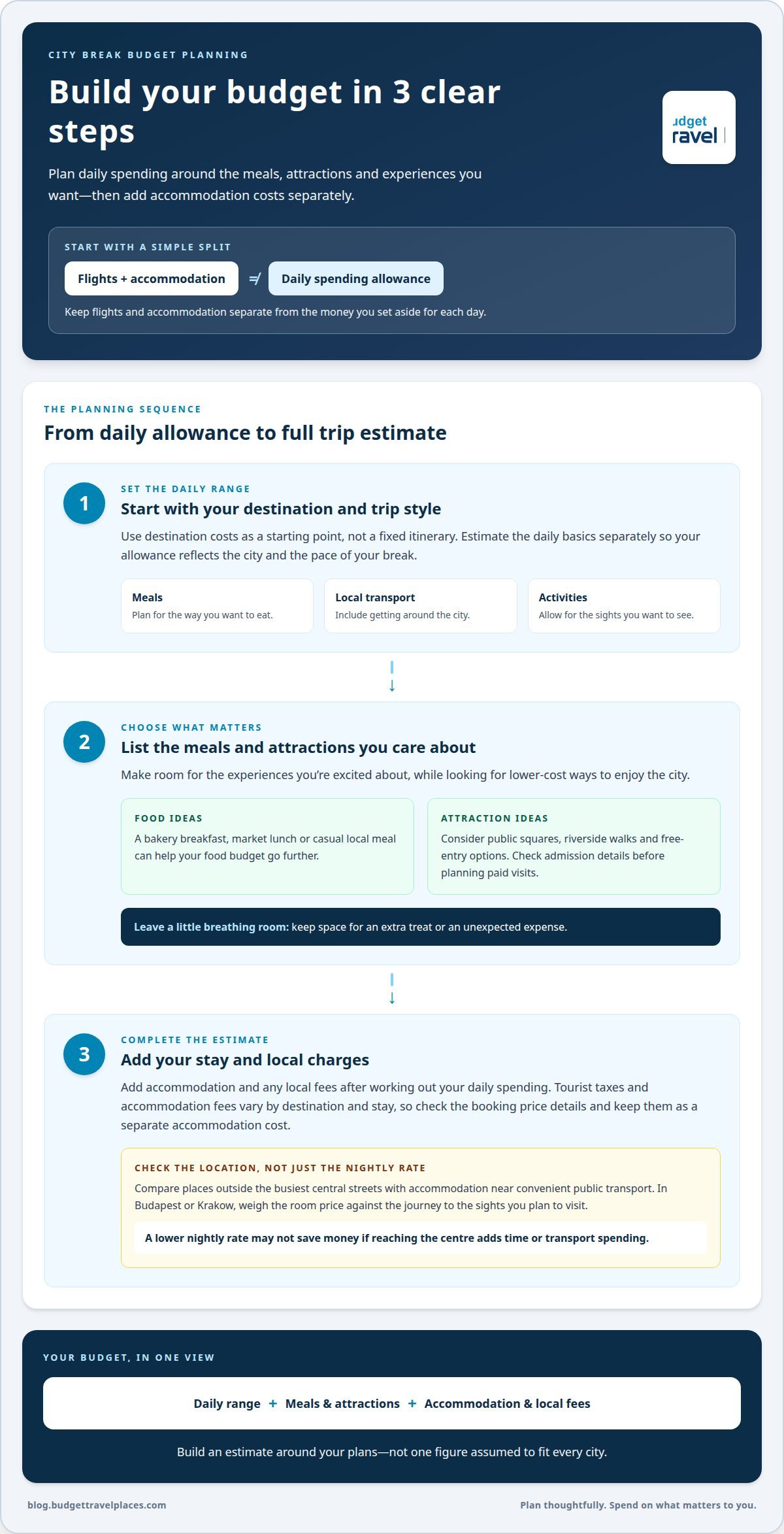
Keep flights and accommodation separate from your daily spending allowance, then budget for meals, attractions and the pace of your trip.
Daily Budgets by Destination
Use destination cost ranges as a starting point, not a fixed itinerary. The differences between cities make your destination one of the biggest budget decisions. Estimate meals, local transport and activities separately, then leave room for an extra treat or an unexpected expense.
Food and Attractions on a Budget
Make your food budget go further with a bakery breakfast, a market lunch or a casual local meal instead of planning every meal around a restaurant. For attractions, look for public squares, riverside walks and free-entry options. Check admission details before adding paid visits to your plans.
Tourist Taxes and Local Fees
Some popular city-break destinations charge a tourist tax or local accommodation fee. Whether you pay one, and how it is calculated, depends on the destination and your stay. Treat it as a separate accommodation cost, not part of your daily spending allowance. When reviewing a booking total, check the price details for local charges and include them in your budget.
Lower-Cost Areas to Stay
The cheapest areas to stay vary by city and travel dates. Start by comparing accommodation outside the busiest central streets with places near convenient public transport. In Budapest or Krakow, weigh the room price against the journey to the sights you plan to visit. A lower nightly rate may not save money if reaching the centre takes extra time or transport spending.
Build your estimate in three steps: set a daily spending range, list the meals and attractions you care about, then add accommodation and any local fees. Keep a little room for choices you make on the day, such as stopping for coffee or adding a visit. This makes your budget specific to your plans, rather than relying on one figure for every city.
What month is cheapest for a city break?
There’s no single cheapest month for every city, but spring and autumn can cost less than peak periods. If you’re travelling from the UK, compare those seasons with the school summer holidays in July and August.
Flexible Dates and Destinations
Flexibility lets you compare different dates and destinations instead of building your plans around a single weekend. Start with a season that suits you, then consider nearby dates and alternative cities. Costs depend on the specific trip, so compare travel and accommodation together. A small change to your plans may reveal a better fit for your budget and the experience you want.
Make a shortlist before booking. Compare a spring trip with an autumn one, then see how each works for your preferred destination. If one city is costly on your chosen dates, consider another place with the sights or atmosphere you’re looking for. Keep the comparison consistent by using similar trip lengths and accommodation styles.
July and August are peak travel periods for UK school holidays, so consider dates outside that window if your schedule allows. If you need to travel during school holidays, you may have more flexibility in your destination or departure day. Focus on the options you can adjust rather than waiting for one particular month to be cheapest everywhere.
Destinations by Season
Choose a destination that suits the weather and the kind of break you have in mind. Seville is described as having autumn temperatures around 25°C, while Marrakech can exceed 20°C even in January. Marseille is described as receiving more than 300 days of sunshine, making it another place to consider for outdoor plans.
These details are a starting point, not a complete measure of value. Think about what you’ll do there: a mild autumn day in Seville may suit walking between sights, while Marrakech can offer a warmer setting for a winter visit. Marseille’s sunshine may appeal if you want to spend time outdoors. Match the season to your interests before comparing travel dates and accommodation.
For a UK option, Liverpool is described as one of the country’s best-value city-break destinations. It offers a domestic alternative to compare when European travel doesn’t suit your calendar. Decide whether you’d prioritise a particular climate, a nearby trip or a city experience, then narrow down your dates. This keeps the season in perspective without making it the only factor in your decision.
To make your shortlist, note your preferred season, the atmosphere you want and the destinations that fit. Compare spring and autumn dates first, then consider summer-holiday travel if it suits your plans. A clear order of priorities helps you choose a trip for both its timing and appeal, rather than picking a month before deciding where you’d like to go.
Low-cost city break package deals
Packages combine travel and accommodation, while flight-only deals let you arrange your stay separately. Compare the full itinerary and included extras, not just the starting fare.
Which budget airlines fly from the UK depends on your departure airport and destination. Compare carriers on your chosen route, then weigh fares against flight times and baggage needs.
Package and Flight Deals
Package deals can make it easier to see flights and accommodation together, but check the length and style of each stay. Other examples include two nights in Dublin from Manchester, an overnight Milan stay, three nights in Fez and five nights in Malta. Inclusions differ, so compare like with like.
For example, the Fez deal includes a riad and breakfast, while the Malta option includes an apartment in Mellieħa. Consider whether those details suit your plans and whether the trip is long enough to enjoy the destination. A flight-only fare may suit you if you want to choose your own accommodation. A package may be simpler if its included stay fits.
Before deciding, compare the same dates and departure airport across package and flight-only options. Check the accommodation type, number of nights and included meals. A headline price is useful only when you understand what it covers. Note the details so the options are easy to compare.
Finding Cheap Flights and Avoiding Fees
To find cheaper flights, compare routes from UK airports that work for your journey and consider different travel days. Tuesday and Wednesday flights, along with early-morning or late-evening departures, are among the lower-cost options. Also consider whether the flight times leave you enough time at your destination.
Before booking, review the fare conditions for cabin and checked baggage, as well as any seat-selection charge. Pack within the included allowance and decide whether choosing seats is worth the extra cost for your group. Then compare the final flight total with a package for similar dates, accommodation and trip length.
Use a simple checklist: route and dates, total flight cost with the baggage you need, then accommodation and included extras. This helps you spot differences between package and flight-only deals without relying on the first price shown. Include convenience in your comparison: a fare with awkward timings may not suit your weekend, even if the initial cost looks appealing.
Affordable European city breaks
For low cost city breaks from the UK, Budapest is a useful place to start: Hungary is consistently voted among Europe’s cheapest destinations for city breaks. Treat that reputation as a starting point, then compare the full trip against your dates, transport and plans. An affordable-sounding destination still needs to suit the kind of weekend you want.
Budapest may appeal if you want a European city escape while keeping everyday spending in mind. Before choosing, note the places and experiences you most want to enjoy, then consider whether your accommodation location fits those plans. Apply the same test to Poznań or another city on your shortlist. This makes it easier to weigh a destination’s character against the practicalities of getting around.
Accommodation choices can change the feel and cost of a stay. A particular style may suit your getaway, but it’s only one option to consider. Compare it with simpler stays, and think about whether you’d rather put more of your budget towards meals or activities.
Try this shortlisting method:
- Set your priorities. Decide whether the journey, cultural sights or accommodation style matters most.
- Choose a few destinations. Compare Budapest and Poznań with other European cities that fit your plans.
- Look at the whole itinerary. Consider transport, accommodation and the experiences you hope to enjoy together.
Next, compare the same travel dates across your shortlist. Check the route from your UK departure airport, the type of accommodation that suits you and the activities you’d like to include. Budapest’s reputation makes it a useful point of comparison, while Poznań offers another city to weigh against your priorities. Focus on the overall fit, not a single headline price.
Keep your options open if your first choice doesn’t match your plans. Compare another destination or travel date, then consider what each offers: a convenient journey, the right kind of stay or more time for the experiences you care about. This is a practical way to shape low cost city breaks around your priorities, rather than choosing a city based on reputation alone.
Budgettravelplaces.com
Budgettravelplaces.com offers Budget Travel Guides and Articles to help you plan a city break around your priorities and spending budget. Turn to its destination ideas and money-saving tips when you’re weighing up where to go, what kind of accommodation suits your plans, or how to make room for memorable experiences. Guides to affordable destinations, lower-cost stays and hidden gems can help you shape an itinerary that feels personal without losing sight of value. Use them to build on your shortlist and think through the choices that matter most, from the character of a city to the pace of your weekend. For more information, contact Budgettravelplaces.com.
Shape your next city escape
Let the experience you want guide your final choices. You might build a weekend around local food, a favourite museum or time to wander without a packed schedule. Choose one priority first, then shape the rest of your plans around it. This keeps your trip personal and helps you decide which extras matter.
A little flexibility can make planning easier, too. Keep an alternative destination or travel date in mind, and focus on the experiences you’ll remember rather than trying to fit everything in. With a thoughtful plan, low cost city breaks can still bring fresh discoveries, shared moments and a welcome change of scene.
Budgettravelplaces.com’s team of avid travellers and budget-savvy explorers shares practical ideas for planning affordable adventures. If you’re ready to take your next step, contact Budgettravelplaces.com and start shaping a getaway that feels right for you.
Frequently Asked Questions
Where else can you go for a city break?
Consider Poznań, Dublin, Milan, Fez or Malta for a change of scene. Each offers a different kind of trip, so start with what you want from your time away: a compact city visit, a longer stay or a relaxed pace. Then compare transport connections and accommodation for your dates. Keeping more than one destination in mind gives you room to choose what fits best.
Which UK cities offer the best-value city breaks?
Liverpool is described as one of the UK’s best-value city-break destinations. Use it to start a domestic shortlist, then compare it with other cities that are convenient for your journey. Your overall spending depends on how you travel, where you stay and what you plan to do, so assess these together. A nearby city may also leave you more of the weekend to explore.
What is the average cost of a weekend city break, including flights, accommodation and food?
There’s no useful average for every weekend break, because the total depends on your destination, dates, departure point and accommodation. Build your own estimate by adding return travel, your stay, meals, local transport and planned activities. For a fair comparison, use the same trip length and travel dates for each destination. Include any extra charges shown with your accommodation or flight before comparing totals.
When is the cheapest time of year to book a city break?
Spring and autumn are useful seasons to compare with peak UK summer-holiday dates, but the cheapest time varies by destination and availability. Choose a flexible travel window, then compare fares and accommodation across nearby dates. Consider whether a major local event coincides with your visit, as demand can affect the options available. Compare the total trip cost instead of assuming one month is always cheapest.
Which cities have affordable public transport, attractions and food?
Budapest and Krakow are sensible choices for a budget-conscious shortlist, but a lower overall daily budget doesn’t mean every expense is cheaper. Compare public transport for the places you want to visit, check admission costs for your chosen attractions and look at everyday meal options. This city-by-city breakdown shows where your money is likely to go and helps you choose based on your plans.
How can I compare the total cost of a city break across different destinations?
Compare destinations using the same dates, trip length and travel needs. Add flights or other transport, accommodation, meals, local journeys, attraction tickets and any applicable accommodation charges. Keep optional extras, such as checked baggage or reserved seats, visible in your calculation. Then weigh the totals against how much time you’ll spend travelling and the activities you want. This makes the comparison more useful than looking at a flight or room price alone.