
House and pet sitting abroad means caring for someone’s home and animals while they’re away, with routines and household duties agreed in advance. Accommodation may be part of the arrangement, but travel and local transport still affect your budget.
If you’re wondering how to start housesitting abroad with no experience, show that you’re reliable, organised and ready to follow instructions. Look for a sit that matches your confidence and availability. It may seem like a low-cost way to see somewhere new, but caring for the pets comes first, and accommodation doesn’t automatically cover every expense.
A clear conversation with the homeowner helps you understand the care routine, household tasks, accommodation and costs to plan for. This guide explains what house and pet sitting involves, what to agree before the stay, and how to weigh accommodation against travel costs so you can make a strong first application and choose a manageable sit.
Key Takeaways
- Match your first sit to the care you already feel confident providing, and write a profile that makes your relevant experience clear.
- Agree pet routines, household duties, emergency contacts and updates before accepting, so you know what the stay involves.
- Choose a manageable first assignment and weigh its care demands against the time you want for exploring.
- Plan for transport and other travel costs as well as accommodation, which may be part of a sit but doesn’t remove every expense.
1. What is house and pet sitting?
House sitting is an agreed exchange: you stay in someone’s home while they’re away and care for their property or pets. A sit might involve feeding a cat, walking a dog, watering plants or simply keeping the home occupied. Start by finding sits that match your experience, travel dates and comfort level.
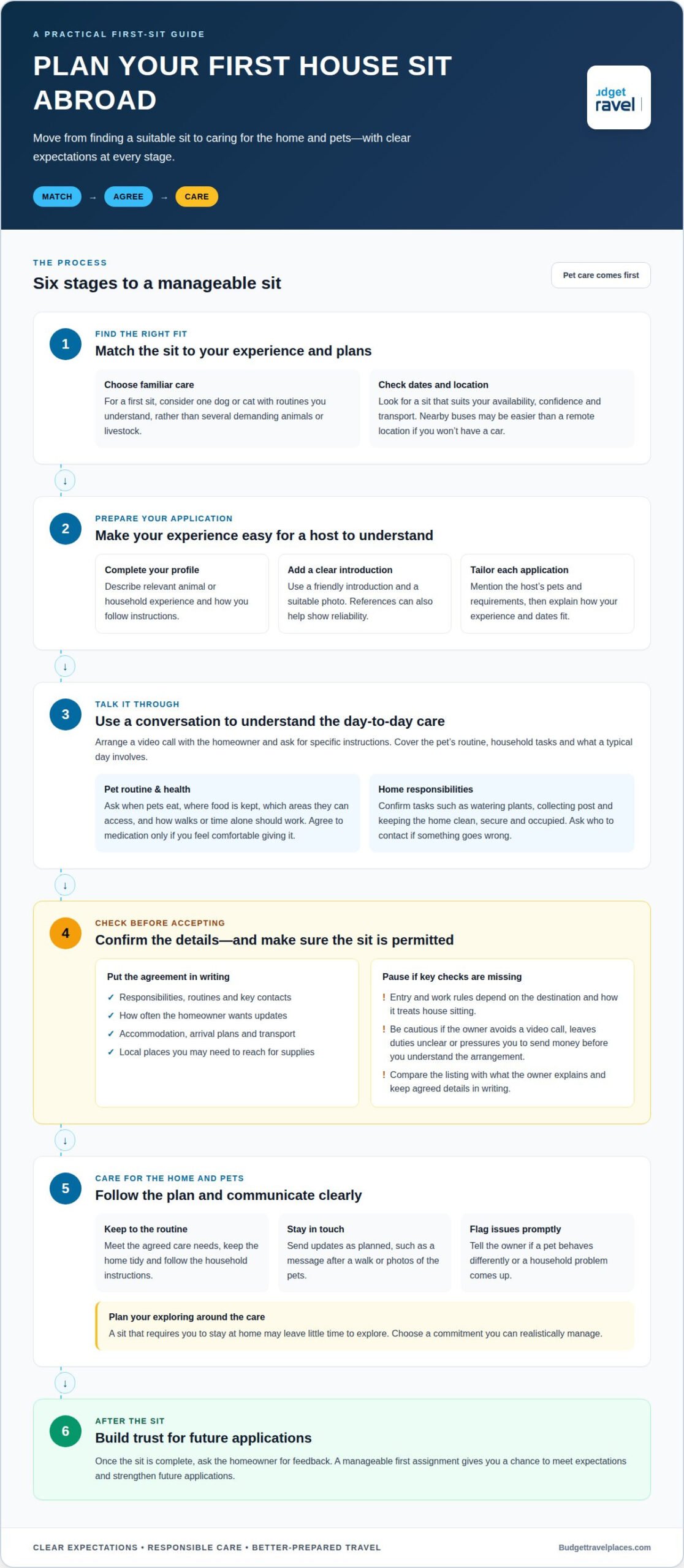
How does house sitting abroad work for beginners? You create a profile on a house-sitting platform, browse opportunities and apply to suitable hosts. If a homeowner is interested, you discuss the animals, routine, responsibilities and dates, often by video call. Accept only when you understand the commitment and can follow the agreed care plan.
Do UK citizens need a visa or work permit to house sit abroad? There’s no single answer for every destination: entry and work rules depend on the country and how it treats house sitting. Before committing, find out whether the arrangement is permitted under the destination’s rules, especially if you’ll also work during your stay.
Choose a platform with listings that suit your destination and experience, then read each host’s description closely. A beginner who has cared for a neighbour’s cat could apply for a cat sit with familiar routines, rather than a sit involving livestock or several demanding animals. Be specific about what you can confidently do.
How can beginners build a house-sitting profile and get their first reviews? Complete every profile section, describe relevant animal or household experience, and explain how you follow instructions. Add a clear, friendly introduction and a suitable photo. In each application, mention the host’s pets and requirements, then explain how your experience and dates fit.
Finding a first sit can take patience, particularly in popular holiday destinations. Apply promptly to suitable opportunities, but don’t accept a poor match just to secure accommodation. A manageable first assignment gives you a chance to meet expectations and build trust. After the sit, ask the homeowner for feedback to strengthen future applications.
2. Agreeing care routines and household responsibilities
Before confirming a house-sitting exchange, discuss the daily routine with the homeowner. Ask when pets eat, where their food is kept and which areas they can access. If a dog needs walks, agree on its usual route and how long it can comfortably be left alone. Clear details help you plan care around your time away from the property.
Be specific about health needs. Medication should be part of the arrangement only if you’ve agreed to it and feel comfortable giving it. Ask the owner to explain the instructions and show you where supplies are kept. If you’ve looked after animals before, describe the tasks you handled rather than claiming experience you don’t have.
Household duties matter too. Confirm whether you’ll water plants, collect post, and keep the home clean, secure and occupied. Ask which rooms or appliances need attention and what to do if something stops working. For example, agree whom to contact about a leak or a pet refusing food. Don’t accept a duty you can’t manage.
Before committing, write down the agreed responsibilities and key contacts. Discuss how often the homeowner would like updates, such as a message after a walk or photos of the pets. Also cover transport, accommodation, arrival arrangements and any local places you’ll need to reach for supplies. If you register through a platform, keep the written agreement easy to find alongside the listing.
During the sit, follow the agreed routine, keep the home tidy and stay in touch as planned. Tell the owner promptly if a pet behaves differently or a household issue arises. A short, clear update gives them useful information without interrupting your day. If balancing care and exploring is part of your plan, budget travel planning can help you think through the trip around those responsibilities.
3. What does a house sitter do?
A house sitter’s first responsibility is meeting the care needs agreed with the owners. For a manageable first sit, choose one dog or cat with familiar routines rather than several animals or livestock. Check how much time pets need each day and whether the owner expects you to stay at home. A sit requiring constant presence may leave little room to explore.
Choose a location that suits your transport, confidence and plans. A flat near local buses may be easier to manage than a remote cottage if you won’t have a car. Read the listing carefully, then arrange a video call with the homeowner. Discuss the pet’s routine, household responsibilities and what a typical day involves. You’ll get a clearer sense of the commitment before accepting.
House-sitting websites and membership platforms vary in their listings and access arrangements. Compare the destinations and types of sits available, then choose a membership that suits where you want to travel and the care you can offer. Read the host’s profile and feedback, ask detailed questions, and confirm the agreement in writing. References from friends, previous employers or people whose pets you’ve cared for can also help show owners that you’re reliable.
What risks should first-time international house sitters watch out for, including scams? Be cautious if a listing avoids a video call, leaves responsibilities unclear or pressures you to send money before you understand the arrangement. Compare the listing with what the owner explains, keep agreed details in writing, and share your travel plans with someone you trust. Check transport and local facilities before accepting, especially for a rural sit. You’re responsible for the animals and home, so choose a location where you can realistically meet those commitments. A good first house sit is one you can manage confidently, not simply the most tempting destination.
4. Accommodation and travel cost considerations
A house sit may include a place to stay in exchange for caring for someone’s home and animals. It doesn’t automatically cover your journey, meals, local transport or membership costs. Before accepting, map out the full trip: compare the cost of getting to the property, travelling around the area and finding somewhere to stay before or after the sit.
Distance affects your budget. A sit near home may require only local transport, while travelling to Australia means planning for a much longer international journey. Rural accommodation can also mean extra transport costs if shops or services are far away. Ask about public transport and whether you’ll need a car, then include those choices in your budget.
How can you compare free house sits with paid pet-sitting jobs abroad? For a house-sitting exchange, weigh the accommodation against travel, food, membership and care responsibilities. For a paid job, compare the pay with your costs and expected duties. Don’t treat either option as cost-free.
Insurance matters too. Arrange suitable travel and medical insurance for your destination, and read the policy wording for exclusions. Consider whether personal liability cover applies to accidental damage at the property or incidents involving animals. Keep the homeowner’s emergency contacts and agreed procedures accessible so you know whom to reach if a problem arises.
Build a backup into your plan. If someone cancels or your travel dates shift, alternative accommodation may become an extra expense. Leave room in your budget for that possibility, alongside transport to the sit and routine costs during your stay. Choose an arrangement that suits your lifestyle, not just the appeal of a free place. To shape a realistic trip budget, explore budget travel guides and plan the costs around the care commitment.
Budgettravelplaces.com
Budgettravelplaces.com offers Budget Travel Guides and Articles to help you plan the wider trip around a house sit. Turn to its practical travel ideas when you’re weighing transport, everyday spending and where you’ll stay before or after caring for someone’s home. A house sit can reduce accommodation needs during the assignment, but planning the journey and care commitment together helps you make a more realistic budget. Use the guidance to shape an affordable itinerary that leaves room for the responsibilities you’ve agreed to and the places you hope to explore. House sitting can bring a memorable change of pace; thoughtful planning helps make the experience work for your travel style. For help with your travel-planning question, contact Budgettravelplaces.com.
Turn your first sit into a travel plan
If you’re working out how to start housesitting abroad with no experience, think beyond securing a place to stay. A first sit can be a stepping stone to slower, more local travel, where your days include both caring for a home and discovering the surrounding area. Give yourself time to learn what pace suits you before building a longer trip around house sitting.
Take a practical next step: choose a destination that excites you, then shape your travel plans around the kind of sit you can responsibly take on. Budgettravelplaces.com’s budget-friendly destination guides and money-saving tips can help you make thoughtful choices. The team draws on tested recommendations and budget travel experience to help keep your adventure within reach and leave room for the unexpected pleasures of travelling somewhere new.
Your next memorable stay can start with a clear plan and an open mind. Contact Budgettravelplaces.com for help planning your trip.
Frequently Asked Questions
What is house and pet sitting?
House and pet sitting is a temporary arrangement where you stay in a homeowner’s property and provide agreed care while they’re away. It can be a useful way to experience everyday life somewhere new, but it isn’t simply a free holiday. For example, a cat may need company at home, so days out could depend on its routine and the owner’s instructions.
What does a house sitter do?
A house sitter carries out the tasks agreed with the homeowner, which may include looking after pets and keeping the property in order. To stay organised, note feeding times, walks and household routines in one place. A written daily plan, for example, can help you remember which pet gets a particular meal and when the owner expects an update.
What should you agree on before a house sit?
Agree on the dates, arrival and departure arrangements, care tasks, emergency contacts and update preferences before accepting. Also discuss what happens if your travel plans change or the homeowner needs to extend their trip. For example, clarify whom to call if a pet needs urgent attention and whether a trusted local contact can help. Keep the final arrangement in writing for easy reference.
Which house-sitting websites are best for first-time sitters from the UK?
The best platform for you is one with listings in your intended destination, clear host profiles and feedback you can read before applying. Look at the types of sits available, the application process and how membership works. If you’re considering a rural assignment, search for listings that fit your transport plans. A platform’s suitability depends on your destination and the opportunities you’re looking for.
How much do house-sitting platforms cost, including annual membership fees?
Membership fees differ between platforms, and the amount can depend on the plan and billing period. Before joining, compare the fee, renewal terms and what access the membership gives you. Then weigh the cost against the destinations and dates you’re considering. Include membership in your trip budget alongside transport and any accommodation needed outside the house sit.
Can you get international house-sitting assignments with no experience or references?
Yes, you can apply without formal house-sitting reviews, though a clear profile and a manageable first assignment can help demonstrate your suitability. If you’re learning how to start housesitting abroad with no experience, describe relevant responsibilities you’ve handled, such as caring for a friend’s pet or keeping their home secure. Ask someone who knows you to provide a reference, and apply for sits that match your actual experience.