
Backpacking means carrying your essentials in a rucksack and travelling on foot, often with an overnight stay outdoors. For your first time backpacking on a budget, keep costs down by borrowing or buying second-hand gear, choosing practical clothing and footwear, and starting with a short, manageable route and campsite. This guide explains what to prioritise, where you can save and how to plan a first trip that feels achievable without losing the thrill of heading into the hills.
Key Takeaways
- Borrow or rent costly kit before buying, and try a loaded backpack on a shorter walk to see how it feels.
- Choose practical clothing and footwear you already own where suitable, and prioritise comfort and weather protection.
- Make your first route short and manageable, with modest elevation gain and a campsite that keeps the walk-in simple.
- Look for second-hand essentials to reduce upfront spending, and check their condition before relying on them outdoors.
- Use Budget Travel Guides and Articles for more ideas on planning affordable adventures.
Borrowing or renting expensive equipment
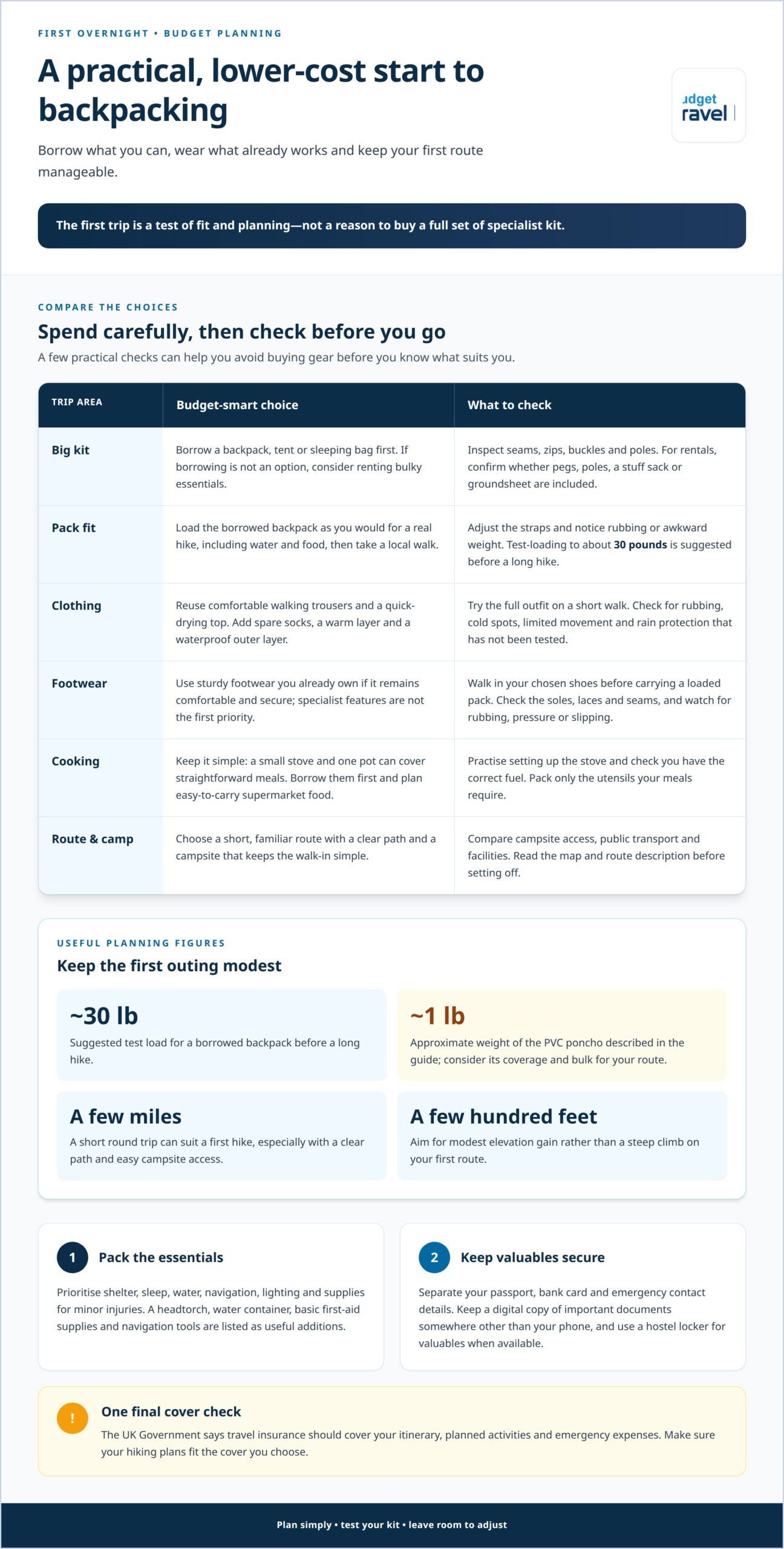
- Borrow costly kit before committing money to equipment you may use once. Ask a friend for a backpack, tent or sleeping bag, then inspect seams, zips, buckles and poles before leaving. Pack it as you would for a real hike, including water and food, and walk locally to spot rubbing or awkward weight. A borrowed backpack can be test-loaded to about 30 pounds before a long hike. Adjust the straps and try it with the clothes and footwear you plan to wear; a comfortable fit matters more than extra features.
- If borrowing isn’t an option, rent bulky essentials, especially a tent or sleeping bag. Confirm what the hire includes, such as pegs, poles, a stuff sack or groundsheet, so you don’t arrive missing a part. For a first overnight trip, prioritise a well-fitting backpack, shelter suited to the conditions, a sleeping bag and an insulating mat. Add a headtorch, water container, basic first-aid supplies and navigation tools. Borrowing or renting lets you learn what suits your route before considering second-hand purchases.
For a first-time trip, pack the essentials for shelter, sleep, water, navigation, lighting and minor injuries; borrow a backpack, tent or sleeping bag where possible. Small items such as a spoon, dry bags and a whistle can often be borrowed or bought cheaply, while fit and condition deserve attention.
- Keep cooking simple. A small stove and one pot are enough for straightforward meals, but borrow them first and practise setting them up before your trip. Check that you have the correct fuel for the stove, and pack only the utensils your meals require. Save on food by planning supermarket meals such as porridge, sandwiches or pasta. You can cook and restock supplies in a hostel kitchen before setting off. Choose food that travels well and needs little preparation. Carrying less packaging also keeps your bag tidier.
- Protect your documents and spending money with a simple routine. Keep your passport, bank card and emergency contact details in separate, secure places, and store a digital copy of important documents somewhere other than your phone. Use a hostel locker for valuables when available, and carry only the cash you need for the day. Before leaving your accommodation, check that you have your phone, documents and keys. For travel insurance and health cover, the UK Government says your policy should cover your itinerary, planned activities and emergency expenses. Make sure your hiking plans fit the cover you choose.
Budget-friendly clothing and footwear
Before buying specialist kit for your first hike, see what you already own. A short walk in your planned outfit can reveal rubbing, cold spots or inadequate rain protection.
-
Pack Light and Reuse Clothes
Lay out each item and pack only clothing with a clear purpose. Wear comfortable walking trousers and a quick-drying top rather than carrying a fresh outfit for every day. A spare pair of socks can help if your feet get wet, and a warm layer is useful when the temperature drops. Avoid heavy cotton extras that take up space and dry slowly. Ask a friend to review your choices, then remove anything you can’t explain needing.
-
Prepare Clothing and Rain Protection
Dress in layers so you can adjust to changes in weather and effort. Start with a comfortable base layer, add a warm jumper or fleece, and keep a waterproof outer layer accessible. A PVC poncho described for backpacking weighs about a pound, so consider whether its coverage and bulk suit your route. Don’t rely on a rain layer you haven’t tried. Check that it covers your pack and lets you move freely.
- Prioritise well-fitting footwear over specialist features or a new look. Wear your chosen shoes on local walks before carrying a loaded pack, and note any rubbing, pressure or slipping. If you already own sturdy hiking boots, check their soles, laces and seams rather than replacing them automatically. Worn footwear can still work if it remains comfortable and secure, but damaged soles or loose parts can make rough paths harder to manage.
- Inspect worn clothing and accessories before packing them. Check that your jacket fastens, trouser pockets close and socks have no holes where they rub. A cap or sun hat you already own may be more useful than a new one, while a simple scarf can add warmth. Wash and dry each item before setting off, then keep spare socks in a separate bag so damp kit doesn’t soak them.
- Try the full outfit during a practice walk, including your waterproof layer and backpack. Notice whether trouser seams rub beneath the straps, whether sleeves restrict movement, and whether shoes feel different on hills. Make one change at a time, such as swapping a bulky jumper for a lighter layer. For more ways to keep your trip affordable, explore these budget travel ideas as you plan what to bring.
Price alone won’t tell you whether an option suits your route. Compare fit, coverage and likely use before spending, and try it on a short outing rather than discovering its limitations in the rain.
Before choosing footwear, check that it feels secure with the socks you plan to wear, leaves room for your toes and doesn’t rub when you walk uphill or downhill. Compare it with what you already own, and consider whether it’s comfortable enough for regular use. A low price is useful only if the item meets your needs.
Choosing an easy first route and campsite
Shape your first adventure around a manageable walk, a straightforward overnight stop and a realistic budget. If you’re planning your first time backpacking on a budget, use these steps to choose a route and pack size without taking on a demanding itinerary.
- Pick a short, familiar route for your first hike. A route of just a few miles round trip can suit beginners, especially when the path is clear and the campsite is easy to reach. Aim for a few hundred feet of elevation gain rather than a steep climb. Read the route description and map before setting off. Mark possible turning points, water stops and safe places to leave the trail. This gives you a simple plan if the weather changes or the walk feels tougher than expected.
- Choose a campsite that makes your first overnight stay simple. Compare its position with your route, access by public transport and the facilities you need. A walk-in site may be quieter, but account for the extra distance while carrying your kit. Read the booking details for charges, arrival times, cancellation terms and cooking rules. For a hostel, consider its location and security arrangements alongside the total cost of your stay.
Passport, visa and entry requirements depend on your destination and nationality. Before booking, consult official entry guidance for the passport validity and visa conditions that apply to your trip.
- Set a daily and weekly budget based on your chosen route. Add transport, accommodation, food, campsite charges and equipment hire, then leave room for unexpected changes. There’s no single useful cost for every trip: destination, season, lodging and travel style all affect the total. Allow for local transfers, baggage charges, snacks and replacement essentials, too. To keep transport affordable, compare train and coach journeys with flights, including the cost and time of reaching each departure point. Check fares for your dates before settling on a destination.
- Select a backpack size to match the length and style of your trip. A 40-litre pack may suit travellers aiming to take their bag aboard as carry-on, while a 65-litre backpack may work for a month or more of travel. Bigger isn’t automatically better: spare capacity can tempt you to carry items you don’t need. Pack the essentials, then check that the bag sits comfortably and leaves room for movement. A common guideline is to keep the loaded backpack at no more than 20 percent of your body weight. Your first time backpacking on a budget can start with a pack that fits the actual route, rather than a bigger bag bought for trips you haven’t planned.
A realistic weekly budget depends on your destination, season, travel style and lodging. Estimate transport, accommodation, food, campsite charges and equipment hire, then include local transfers, baggage, snacks, replacement essentials and a buffer for unexpected changes.
Finding second-hand backpacking gear
- Write down what your route requires, then look for those items second-hand. Prioritise a well-fitting backpack, shelter and sleeping kit, since replacing unsuitable essentials can wipe out any saving. Add smaller items only after checking what you already own. Treat that as an example, not a price guide for every item or condition.
Buying used works best when an item suits your trip, rather than simply looking like a bargain. For example, a couple sharing a tent can look for a suitable shared shelter instead of buying separate tents.
- Inspect each item in person where possible, and test every part before paying. For a backpack, adjust the straps and fasten the buckles, then check the seams, zips and back panel. Extend and collapse trekking poles and make sure their locks hold. Open the tent fully to check its poles, pegs, seams and main zip. Ask to see the sleeping bag unrolled, including its zip and fabric, rather than judging it from a photograph.
For a stove, check that its controls move and its parts fit together. Don’t buy equipment with missing components unless you know how to replace them safely. A low price won’t help if the kit fails during your trip.
- Compare the condition and completeness of similar listings, not just their asking prices. Record what each item includes, such as a tent’s poles or a sleeping bag’s storage sack. Ask how the equipment was stored and used, then look for clear signs of wear, damp or damage. Meet in a safe public place for local purchases, and take time to inspect the kit before handing over money.
When buying online, request close-up photographs of areas under strain, such as backpack stitching and tent pole joints. Keep the listing details and seller messages until the item arrives. If the description and photographs don’t match, pause the purchase rather than risk an expensive surprise.
- Try second-hand equipment at home before relying on it outdoors. Pack your usual load, adjust the backpack, and practise setting up the tent in a garden or suitable indoor space. Check that the sleeping bag fits your needs and that the stove works with its intended fuel. For a first trip, borrow any uncertain item from a friend instead of buying it immediately. Keep your shortlist focused on reliable essentials, and explore budget travel guides for more practical planning ideas.
Budgettravelplaces.com: Budget Travel Guides and Articles
Budgettravelplaces.com offers Budget Travel Guides and Articles to help you turn backpacking ideas into a practical, affordable plan. Use them when you’re choosing where to go, weighing low-cost accommodation options or deciding how to stretch your travel budget beyond equipment. For example, once you’ve settled on a route, destination guides can help you think through the travel and stay choices that shape your overall costs. The advice is designed for budget-conscious travellers who want memorable experiences without spending on every possible extra. Keep your plan flexible, focus on what matters for your trip, and use the guides to explore ways to make your next adventure work for you. If you’d like to ask a question about the guides, contact Budgettravelplaces.com.
Take your first steps towards the trail
Your first time backpacking on a budget doesn’t need an ambitious itinerary. Start with a route that feels manageable and treat the trip as a chance to learn what works for you. Build confidence gradually, then choose a longer adventure when you’re ready.
Before setting off, make a simple plan: decide where you’ll walk, where you’ll sleep and how you’ll get home. Keep your choices flexible enough to suit your comfort and spending priorities. A well-planned first outing can be memorable without turning preparation into a shopping list.
Budgettravelplaces.com offers Budget Travel Guides and Articles for travellers planning affordable adventures. Its team of avid travellers and budget-savvy explorers shares ideas to help you shape your next trip. If you’d like to ask a question, contact Budgettravelplaces.com. Your first trail is a chance to discover what backpacking can be, so take that next step at your own pace.
Frequently Asked Questions
What is backpacking?
Backpacking is independent travel where you carry your belongings in a backpack, often moving between places on foot or public transport. It can mean a multi-day walking trip with overnight camping, or a longer journey that combines hostels, trains and local exploration. The defining feature is travelling with your essentials in one bag, rather than relying on a fixed itinerary or extensive luggage.
What are the cheapest beginner-friendly backpacking routes from the UK?
The lowest-cost option is often a short route close to home, where you can limit transport and accommodation spending. Choose a clearly marked walk of a few miles round trip with only a few hundred feet of elevation gain, then compare nearby campsite fees and public transport fares. Your departure point, travel dates and overnight plans determine the overall cost, so compare the complete journey before choosing.
What is a realistic budget for a week of backpacking?
Add transport, accommodation, food, campsite charges and equipment hire, then allow for local transfers, baggage, snacks, replacement essentials and unexpected changes. The total depends on your destination, season, travel style and lodging.
How can beginners find cheap flights, trains and buses for backpacking?
Compare train and coach journeys with flights, including the cost and time of reaching each departure point, and check fares for your dates. You may find bus travel cheaper than flying, so compare fares for your dates.