
The best first destination for affordable solo travel is one that suits your budget and comfort level, with straightforward transport, walkable sights, welcoming accommodation, and activities that make each day rewarding. A low headline price is only part of the picture: include airport transfers, meals, local transport, and the experiences you most want to enjoy.
It’s natural to want an exciting trip without worrying about finding your way or spending more than planned. Choose a destination where you can set your own pace, then make practical choices that help you feel prepared, such as booking a well-located hostel and planning your arrival route.
This guide explains how to compare destinations for a first solo trip, choose affordable accommodation with comfort and safety in mind, and plan transport, activities, and everyday spending. You’ll also find practical solo travel tips to help you stay flexible, meet people if you want to, and make the trip your own.
Key Takeaways
- Choose a first solo destination by weighing everyday costs, transport, accommodation, and the kind of activities you want, not by comparing headline prices alone.
- Pick a hostel that suits your comfort level and social style, and use recent guest reviews to get a clearer sense of the stay.
- Plan Croatia spending around getting between places, where you stay, and where you eat, so your budget reflects the whole trip.
- Build a simple arrival plan, keep your itinerary flexible, and choose travel insurance that covers your plans, activities, and emergency expenses.
- Use Budgettravelplaces.com’s budget travel guides and articles for practical ideas as you shape your route and make your trip your own.
1. What is the criteria FOR THE BEST FIRST TIME SOLO TRAVEL DESTINATION?
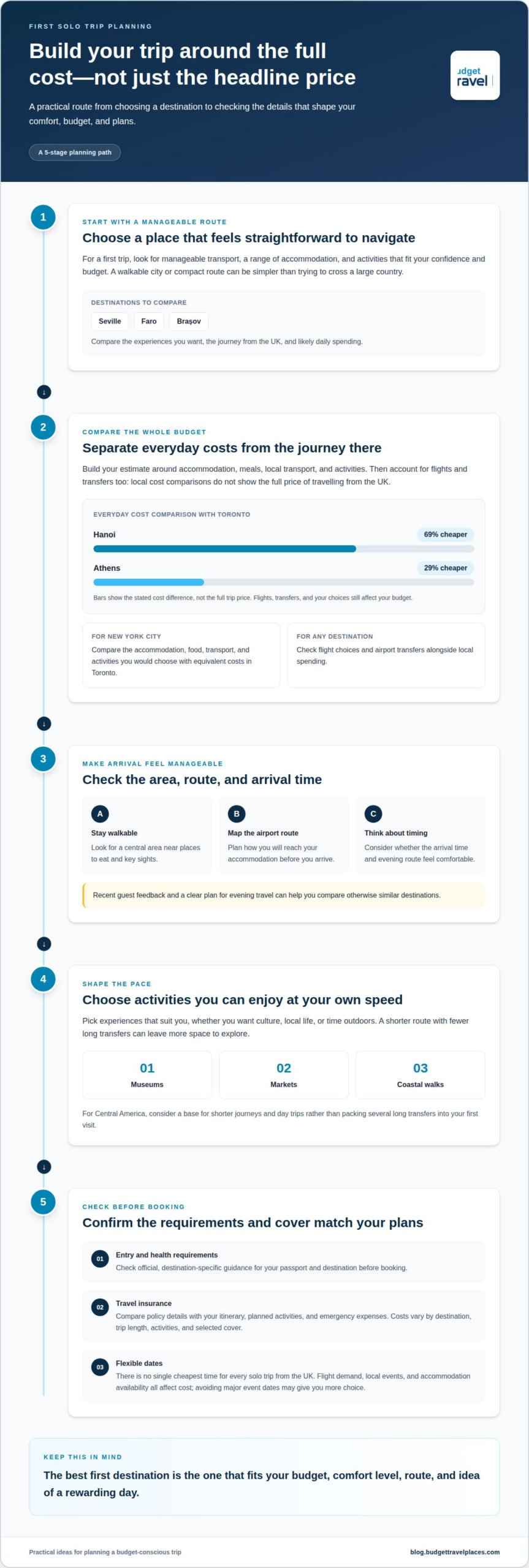
For a first trip, choose a place with manageable transport, a range of accommodation, and activities that suit your confidence and budget. Start with a walkable city or compact route rather than trying to cross a large country. In Europe, compare cities such as Seville, Faro, and Brașov based on the experiences you want, the journey from the UK, and likely daily spending. Build your budget around meals, local transport, accommodation, and activities, not a single headline figure.
Compare everyday living costs separately from the cost of getting there. Hanoi is 69% cheaper than Toronto, while Athens is 29% cheaper than Toronto. These comparisons can help you assess local costs, but they don’t tell you the full price of a trip from the UK. For New York City, compare the accommodation, food, transport, and activities you’d choose with the equivalent costs in Toronto. Flight choices and transfers also shape the overall budget.
A beginner-friendly destination makes everyday decisions simpler. Look for a central area where you can walk between your accommodation, places to eat, and key sights, then map your route from the airport. Choose activities you’ll enjoy alone, such as museums, markets, or coastal walks. Solo female travellers may also want to consider whether the arrival time and route to their accommodation feel comfortable. Recent guest feedback and a clear plan for evening travel can help you compare otherwise similar destinations.
For variety, consider established European city routes, Montevideo in South America, or destinations in Central America. In Central America, choose a base that allows shorter journeys and day trips instead of packing several long transfers into your first visit. Famous sights can be rewarding, but local culture, walkable routes, and straightforward transport may matter more. Match your destination to the pace and type of adventure you want.
UK travellers should check visa, entry, and health requirements for their passport and destination before booking. Requirements vary by country, so consult official destination-specific guidance and consider any preparations needed for your planned activities.
There’s no single cheapest time of year for every solo trip from the UK. Compare flexible dates for your chosen destination, since flight demand, local events, and accommodation availability all affect the overall cost. Avoiding dates around a major event may also give you more choice.
Choose travel insurance that covers your itinerary, planned activities, and emergency expenses, as the UK Government advises. Costs vary with your destination, trip length, activities, and selected cover. Compare policy details with your plans, especially if your route includes activities such as hiking or surfing.
2. Choosing a hostel for solo travel
A hostel can help keep accommodation costs down and make it easier to meet other travellers. Before booking, decide what matters most: a lower dorm price, a quieter night, a central location, or organised activities. Compare the total cost of your stay, not just the nightly rate. A hostel farther from the centre may mean extra transport costs and a trickier late arrival.
Check the room type and practical details before choosing. A dorm can have 18 beds, so look at its size, bathroom arrangements, luggage storage, and stated quiet hours. If sharing a room doesn’t suit you, compare a private hostel room with a budget hotel or guesthouse. A modestly priced private room may fit your needs better than a dorm, especially when you value rest and privacy.
Use guest feedback to assess the experience. A rating above 80% is a useful starting point; read recent comments for specific patterns about cleanliness, noise, staff, and the neighbourhood. Search for details that matter to your plans, such as whether guests mention arriving after dark or finding the nearest transport stop easily.
Social atmospheres vary between hostels. Check whether the property lists shared dinners, walking tours, or communal spaces where you can chat without joining every activity. A quiet kitchen or lounge can make it easier to meet people at your own pace. Hosted meals may also help you plan evening food spending, but check whether meals are included or cost extra before booking.
In Bali, compare hostels and surf camps by location and the activities included in the stay. A camp near the beach may suit a surfing-focused trip, while a hostel in town can make cafés, transport, and other activities easier to reach. Read the booking details carefully to understand what the stay covers, including any meals or lessons. Choose an option that matches your plans instead of paying for activities you won’t use.
For cities with several travel destinations nearby, check how each hostel connects to your route. A well-placed base can make day trips simpler and leave more room in your schedule for local food or museums. Compare flexible cancellation terms and arrival instructions as well as room prices. For more practical ideas as you plan, explore budget hostel travel tips and choose a stay that fits both your budget and social style.
3. How do I choose affordable but safe accommodations?
Start with the neighbourhood, arrival route, and latest guest feedback. For any accommodation, read the three latest reviews and look for repeated comments about access, cleanliness, noise, and staff. A low rate won’t feel like good value if reaching your room means an awkward late-night journey or extra local transport.
To reduce the chance of a single supplement, compare dorm beds, private rooms, and guesthouses priced for one person. Search for the total cost for your dates, not a per-person headline based on shared occupancy. If a private room costs more than a dorm, weigh the difference against your need for privacy and rest.
Croatia calls for route planning as well as a room budget. The country has more than 70 islands and has experienced a tourism boom over the last 10 years. Decide whether your trip centres on one coastal base or several stops, then account for transport between your accommodation, beaches, and towns.
In Croatia, compare accommodation and food options by area and travel style. Staying outside the busiest tourist spots can give you different choices for rooms and restaurants. Consider nearby supermarkets and casual places to eat alongside restaurants, so your daily food plan stays flexible. Island-hopping can add transfers, so weigh each extra stop against the travel time and cost.
Compare flights based on your departure airport, travel dates, baggage needs, and arrival time. Plan the airport transfer separately: check whether public transport serves your arrival point and where it stops relative to your accommodation. A cheaper flight may be less convenient if it lands late or requires a costly onward journey.
Before booking, map the route from the station or airport to your first night’s accommodation. In Croatia, include ferry connections if your itinerary involves islands. In Eastern Europe, compare train and bus options for the full route, including station locations and departure times, rather than choosing by ticket price alone.
Use journey-planning and booking tools to compare routes, then read the operator’s terms before paying. Keep your accommodation address and arrival instructions accessible offline. If a connection changes, you’ll have the details to hand without relying on mobile service or searching for directions while tired.
Balance safety and savings by giving each choice a clear purpose. A central room may cost more but reduce transfers; a stay farther out may work if public transport fits your plans. For a trip around Croatia, compare the full journey, meals, and accommodation, then choose a route that leaves room for the places you most want to see.
4. Solo travel tips
A solo trip runs more smoothly when you plan the first day and leave the rest flexible. Save your accommodation address, arrival instructions, and route from the station before leaving home. If your train reaches a new city after dark, for example, decide how you’ll travel from the station before boarding. Keep booking details accessible offline, so a poor connection won’t leave you searching through messages.
Share your itinerary with someone you trust, including where you’re staying and how to reach you. Send an update when you arrive, then agree how you’ll communicate if plans change. Keep copies of important travel documents separate from the originals, and store emergency details somewhere you can access without your phone. These simple steps give someone at home useful information without requiring updates on every move.
Build each day around one main activity, such as a museum visit or coastal walk, rather than scheduling every hour. That leaves room to follow a local recommendation or rest when you need to. In a city such as Athens, you might pair a booked attraction with an unplanned afternoon. Flexible plans can also help you avoid paying for activities that don’t suit your mood.
Make spending easier to manage by setting a daily limit for meals, local transport, and activities. Note each purchase, then adjust the next day if a paid experience costs more than expected. Choose an inexpensive lunch from a local market and save a sit-down meal for somewhere you’re keen to try. A modest buffer for unexpected transport or changes can make your budget more resilient.
In a hostel or shared accommodation, be considerate of other guests and mindful of your belongings. Keep valuables secure, follow the property’s arrival instructions, and avoid disturbing sleeping guests when you return late. In a dorm, pack what you need for the morning before bed, so you’re not rummaging through your bag while someone else is sleeping.
Travel insurance should cover your itinerary, planned activities, and emergency expenses, according to the UK Government. If your solo trip includes surfing, hiking, or another activity, check that your policy covers it. Review the limits and exclusions alongside the price rather than choosing cover by cost alone.
Keep your plans adaptable, but make key decisions before departure: your first night’s stay, arrival route, and a way to contact someone. Those choices make it easier to enjoy destinations for solo travellers on your own terms. For practical inspiration as you shape your route, explore solo travel planning ideas.
Budgettravelplaces.com: Budget Travel Guides and Articles
Budgettravelplaces.com publishes budget travel guides and articles to help you turn solo-trip ideas into a practical plan. Use them to weigh destinations, find lower-cost places to stay, and balance transport, food, and activities. The guides help you consider the trade-offs behind a route, so a low accommodation cost doesn’t distract from long transfers or other expenses.
Bring your priorities into the planning process: the experience you want, your preferred pace, and the comforts you don’t want to compromise. Use the guidance to shape a trip that feels manageable and personal, whether you’re choosing a first city break or planning a longer route.
For help finding ideas for your next budget-conscious trip, contact Budgettravelplaces.com.
Make your first solo route your own
Your first solo trip can begin with an experience you’re genuinely curious about. Let that interest shape your pace and route instead of trying to fit every famous sight into one holiday. A slower plan leaves room for spontaneous discoveries and makes the trip feel personal.
With affordable solo travel, your best choices are the ones that reflect what you value most. Budgettravelplaces.com’s team of avid travellers and budget-savvy explorers brings that practical perspective to its travel guides and articles, helping you find ideas for exploring while spending thoughtfully.
Ready for fresh inspiration as you plan your next adventure? Explore Budgettravelplaces.com’s budget travel guides and articles, and take the next step at your own pace.
Frequently Asked Questions
What is the criteria for the best first-time solo travel destination?
Choose somewhere where you can picture enjoying an ordinary day, not just visiting its headline attractions. Sketch a simple day from breakfast to evening, including one activity and some unplanned time. If that feels manageable, the destination may suit your first trip. You could also start with a shorter stay to learn what pace and level of independence feel right for you.
How do I choose affordable but safe accommodations?
Read the booking conditions closely before reserving. Check the exact room type, what the stated rate covers, the cancellation deadline, and how payment is handled. Confirm the reservation is for one guest so the quoted total reflects your booking. Save the confirmation and property details somewhere accessible offline, separate from your passport.
How do I deal with loneliness while travelling alone?
If loneliness catches you off guard, change the setting rather than judging the whole trip. Take a break in a café, browse a market, or choose a familiar activity to reset. A small ritual, such as writing a few notes at the end of the day, can give your experiences a sense of continuity. You can also arrange a call with someone at home when it suits you.
What are the best safety precautions to take in unfamiliar places?
Set personal boundaries before going out, including what information you’re comfortable sharing with new acquaintances. Keep your phone charged and essential contact details in a separate note. If someone’s behaviour makes you uneasy, end the conversation and move towards a staffed or public place. Before travelling, save local emergency contact information and learn how to ask for help in the local language.
Which European budget city should you choose?
Choose Seville if Moorish architecture and cultural activities appeal to you: the Alcázar and flamenco offer distinct ways to spend a day. Faro suits a coastal break, while Brașov can be a base for visiting Bran Castle, Peleș Castle, and Râșnov Fortress. Consider which experiences you’d most enjoy, then compare your travel dates and route before settling on a city.
Why is a solo holiday a good idea?
A solo holiday gives you the chance to notice what you enjoy without matching another traveller’s preferences. You might discover that you love slow mornings, long museum visits, or trying unfamiliar food. Making those choices yourself can help you understand what matters on future trips. Start with an interest you already have, and let it guide your experience instead of chasing a perfect itinerary.